Interest on the Debt Is Becoming One of Washington's Biggest Bills
Federal debt often feels abstract, but the interest paid on that debt is consuming a growing share of the federal budget and limiting future choices for lawmakers.
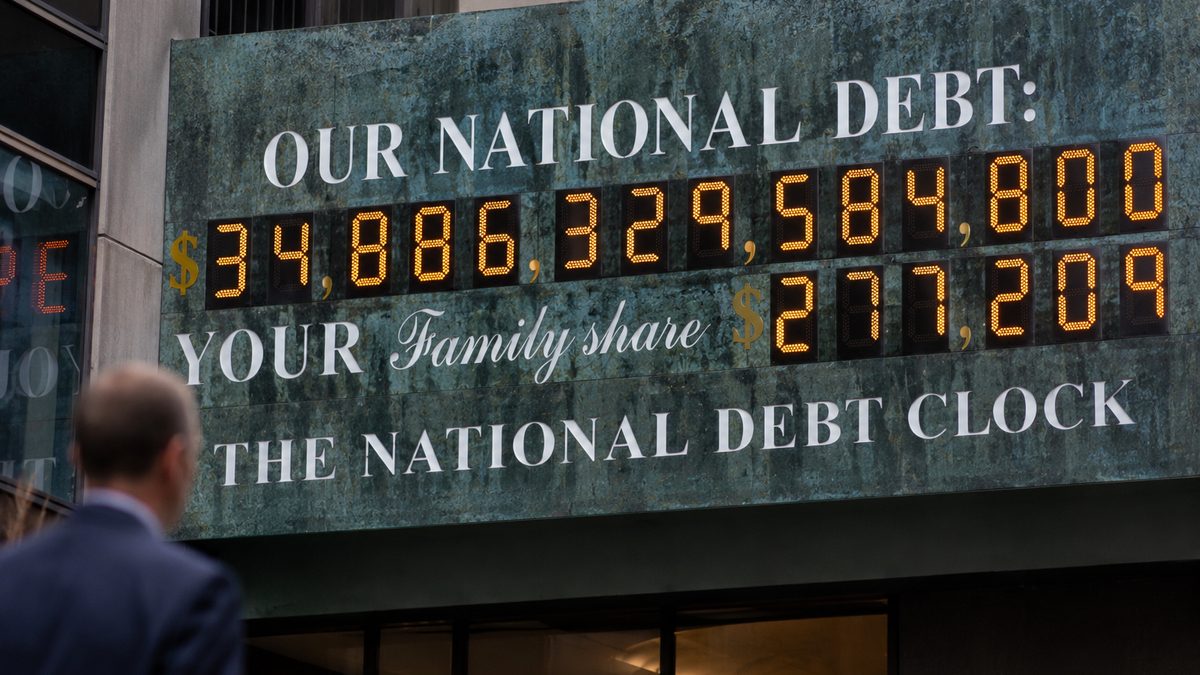
Federal interest payments are consuming a growing share of government spending, according to recent fiscal reports. Editorial illustration by TheDailyGlobe.
Key Facts
- The federal government pays interest on money it has borrowed through Treasury securities.
- Interest costs have risen as overall debt levels and interest rates have increased.
- Federal interest spending competes with other budget priorities for available resources.
- GAO and CBO have warned that current fiscal trends are difficult to sustain indefinitely.
- Neither major political party has produced a broadly accepted long-term fiscal solution.
Most Americans never receive a bill showing their share of the national debt. That is one reason federal borrowing can feel distant compared with issues like taxes, inflation, or monthly household expenses. Yet one part of the debt is becoming harder to ignore: the interest payments required to service it.
According to recent reports from the Government Accountability Office and Congressional Budget Office, interest costs are consuming an increasingly large portion of federal spending. Unlike many government programs, interest payments do not directly provide services, build infrastructure, fund research, or pay benefits. They are simply the cost of borrowing money in the past.
Why Interest Payments Matter
When individuals borrow money for a mortgage, car loan, or credit card, they pay interest to the lender. The federal government operates on a much larger scale but follows the same basic principle.
To finance deficits, the Treasury issues securities that investors purchase. In return, the government agrees to repay the borrowed money along with interest. As debt accumulates, the amount devoted to interest payments grows.
That matters because every dollar spent on interest is a dollar that cannot be used elsewhere without additional borrowing, spending reductions, or higher revenue.
A Growing Budget Competition
Congress faces choices every year about how federal dollars should be allocated. Lawmakers debate defense spending, transportation projects, veterans' services, health programs, tax policy, disaster relief, and many other priorities.
Interest payments are different because they are not optional. The government must make those payments to meet its obligations to investors.
As interest costs rise, they claim a larger share of available federal resources before lawmakers even begin debating other priorities. That can make budget decisions more difficult because there is less flexibility within the overall fiscal picture.
Recent projections from federal budget analysts suggest interest spending could continue growing over the coming decades if current trends persist.
How the Country Reached This Point
The federal debt did not emerge from a single law, administration, or congressional session. It reflects decades of policy decisions made by elected officials from both parties.
Wars, recessions, tax changes, demographic shifts, emergency spending, entitlement commitments, and economic crises have all contributed to borrowing over time. More recently, pandemic-era spending added substantially to federal debt levels.
At the same time, Americans have generally shown support for popular government programs while often opposing major spending cuts or significant tax increases. That political reality has made long-term fiscal compromises difficult.
The result is a pattern that fiscal watchdogs have repeatedly highlighted: borrowing continues while durable solutions remain elusive.
What the Reports Do and Do Not Say
The GAO and CBO reports do not predict an immediate fiscal collapse. They do, however, identify long-term trends that federal policymakers will eventually have to address.
The reports indicate that debt and interest costs are projected to grow faster than some other parts of the federal budget under current assumptions. Over time, that can reduce policymakers' ability to respond to unexpected challenges such as recessions, natural disasters, military conflicts, or public health emergencies.
At the same time, projections are not guarantees. Future economic growth, inflation, interest rates, tax policy, spending decisions, and demographic trends can all affect fiscal outcomes.
What remains uncertain is which combination of policy changes future Congresses may choose and how quickly lawmakers will act.
The Choices Ahead
Most fiscal experts agree on one point: reducing long-term debt growth generally requires tradeoffs. Those tradeoffs often involve some combination of spending restraint, program changes, economic growth, tax adjustments, or a mix of several approaches.
The challenge is political as much as financial. Nearly every proposed solution affects voters, industries, regions, or government programs that have strong public support.
For taxpayers, the importance of rising interest costs is not that they create an immediate crisis. The bigger issue is that they narrow future choices. Money spent paying for yesterday's borrowing cannot also be used for tomorrow's priorities. How Congress chooses to address that reality will remain one of the central fiscal questions facing Washington in the years ahead.
Reporting note: Reporting draws on Government Accountability Office fiscal reports, Congressional Budget Office projections, federal budget data, and reviewed background materials. This article was produced with AI-assisted research and reviewed by an editor before publication.