Georgia’s QR Code Ballot Delay Shows Why Election Rules Need to Be Settled Early
Georgia lawmakers are likely delaying a planned phaseout of QR-code vote counting, raising a practical question about how close to voting election systems should change.
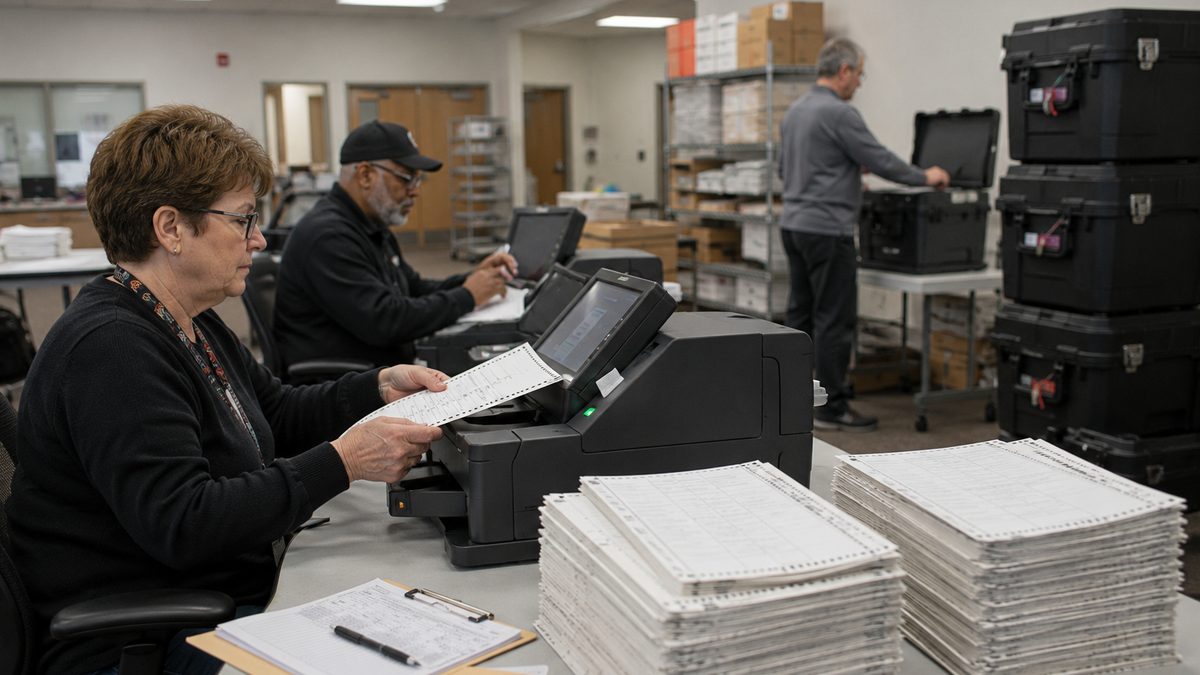
Election system changes require time for counties to prepare, test equipment and explain procedures clearly. Editorial illustration by TheDailyGlobe.
Key Facts
- Associated Press reporting says Georgia lawmakers are likely delaying a planned phaseout of QR-code ballot counting.
- The issue comes before the 2026 midterm election cycle, when counties need clear rules and enough time to prepare.
- Election system changes can affect equipment testing, training, ballot design, public communication and local election administration.
- The Georgia Secretary of State’s office provides election resources for voters and election administration, but the legislative question concerns what counting system counties will use.
- The available reporting does not establish whether a delayed phaseout will resolve broader public concerns about election technology.
Election machinery is rarely the part of politics that gets people’s attention. But the boring parts matter: ballots, scanners, software, county training, deadlines and the rules that tell local officials what system they are supposed to use.
That is why Georgia’s likely delay in phasing out QR-code ballot counting matters before the midterms. Associated Press reporting says state lawmakers are likely to delay a planned replacement of the QR-code system used in vote counting. The issue is not only whether one system is better than another. It is whether election rules are settled early enough for counties to prepare and voters to trust the process.
Changing election systems close to voting can create avoidable risk. Even when the goal is to improve confidence, a late shift can leave election offices racing to update equipment, retrain workers, revise instructions and answer public questions under pressure.
What the QR Code Issue Is About
Georgia has used voting equipment that prints a paper ballot summary with a QR code that scanners use to count votes. Critics of that approach have argued that voters cannot easily read a QR code themselves, while supporters of the broader system have pointed to paper records and election procedures meant to support accurate tabulation.
The planned phaseout was intended to move away from QR-code vote counting. AP reporting now says lawmakers are likely to delay that replacement. That means counties may continue with the existing approach longer than some election observers expected.
The important distinction is that the delay is about election administration, not about telling voters how to vote. The question for state officials and counties is what technology, ballot format and counting process will be in place when voting begins.
Why Timing Matters for Counties
County election offices need time. They do not simply flip a switch when state lawmakers change a voting system. They have to test equipment, prepare ballots, train poll workers, update procedures and make sure local staff understand what to do if something goes wrong.
A system change also has to fit the election calendar. Ballots and machines must be ready before voters arrive. Counties need time to conduct logic and accuracy testing, prepare backup plans and explain procedures to election workers who may only serve during election season.
When rules are unsettled too close to an election, the pressure lands on local officials. That can increase the chance of confusion, delay or inconsistent communication across counties. None of that automatically means votes will be counted incorrectly, but it can make an already demanding job harder.
Why Voter Trust Depends on Clear Rules
Voter trust is not built only by the technology a state chooses. It is also built by whether the public can understand the rules before Election Day and see that officials are following a stable process.
That is the challenge in Georgia. QR-code ballot counting has been a point of debate because many voters cannot personally interpret the code used by the scanner. Even if officials maintain that procedures are secure and auditable, the public-facing experience still matters. A voter can read printed selections, but not the QR code itself.
A delay in replacing the system may be practical if lawmakers and election officials believe counties do not have enough time to make the change safely. But it may also leave unresolved concerns among voters and advocates who wanted the state to move away from QR-code counting sooner.
The Risk of Late Election Changes
Late election changes can create two different problems at once. First, they can create operational problems for counties. Second, they can create communication problems for voters who hear that the system is changing, delayed or disputed but do not know what that means in practice.
Election administration works best when the rules are clear early. That gives local officials time to prepare and gives the public time to understand what will happen. It also reduces the chance that ordinary technical questions become fuel for suspicion.
That does not mean states should never update voting systems. Election technology should be reviewed, improved and replaced when needed. The point is that the calendar matters. A good reform can still create problems if it arrives too late for counties to implement it cleanly.
What Remains Unclear
Several questions remain. The available reporting does not show the final shape of any delay, how long the phaseout may be postponed or what exact schedule lawmakers will set for replacement. It also does not establish whether the delay will satisfy county officials, election-security advocates or voters concerned about the current system.
It is also unclear how Georgia officials will explain the delay to the public. That may matter almost as much as the legislative timeline. A clear explanation can help voters understand what system will be used and why. A confusing explanation can leave room for doubt.
The next thing to watch is what Georgia lawmakers formally approve and how state and county election officials prepare for the midterm calendar. The practical test will be whether counties have enough time to run the system they are given and whether voters receive clear, calm information before voting starts.
The lesson reaches beyond one state. Election rules do not need to be dramatic to be important. When ballots, scanners and counting procedures are involved, clarity before Election Day is not a luxury. It is part of how confidence is built.
Reporting note: Reporting draws on Associated Press reporting, Georgia Secretary of State election resources, election calendar materials, and reviewed background context. This article was produced with AI-assisted research and reviewed by an editor before publication.