Court Ruling Gives Federal Workers More Room to Prove Disability Claims
A federal appeals ruling could make it easier for some federal employees to qualify for disability retirement when medical evidence is complicated.
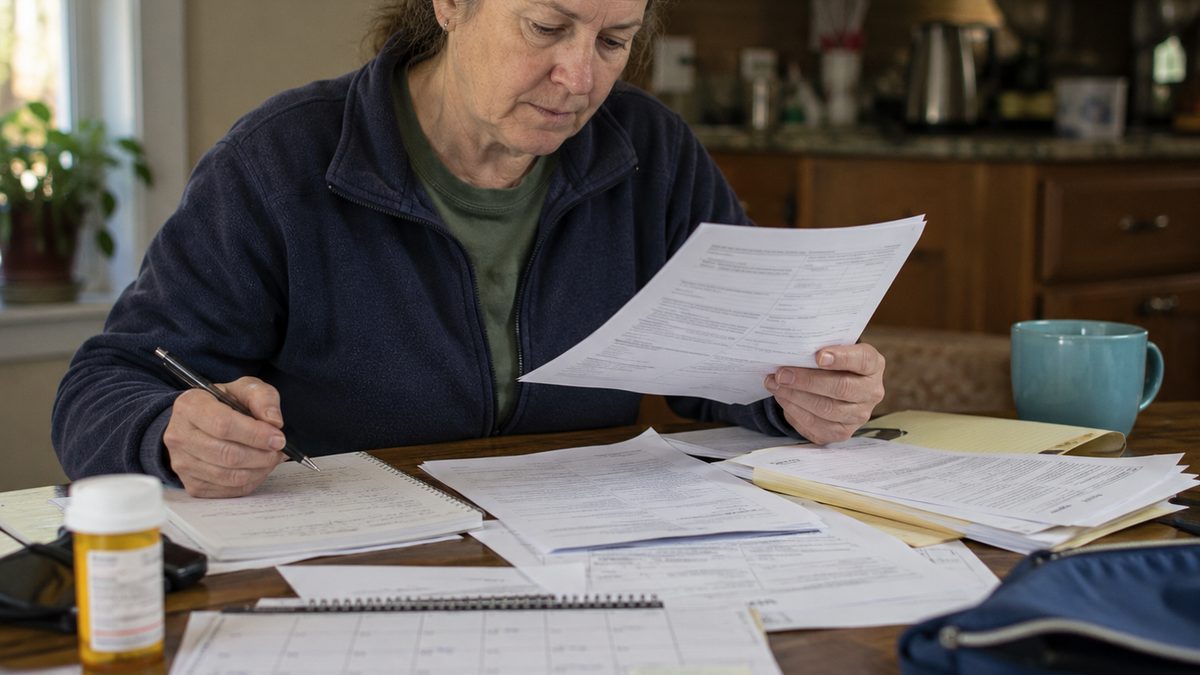
A court ruling could affect how some federal employees prove disability retirement claims when medical evidence is complicated. Editorial illustration by TheDailyGlobe.
Key Facts
- A federal appeals ruling could make it easier for some federal employees to qualify for disability retirement when medical evidence is complicated.
- The issue applies to federal employees seeking disability retirement, not workers in every job or private-sector employees generally.
- The U.S. Office of Personnel Management oversees disability retirement rules for eligible federal workers under federal retirement systems.
- The ruling matters because proof standards can affect whether a worker receives benefits after becoming unable to keep doing the job.
- The available reporting does not show how many federal employees will be affected or how agencies will apply the ruling in every case.
For a federal employee who becomes too sick or injured to keep doing the job, the hardest question may not be whether the condition is real. It may be whether the evidence fits the government’s rules well enough to prove the claim.
A federal appeals ruling could give some federal workers more room to make that case when medical evidence is complicated. Federal News Network reported that an appeals court eased disability retirement rules for federal employees, a decision that matters for workers whose health conditions do not always fit neatly into simple paperwork.
The ruling applies to federal employees, not all workers. But it is still a practical workplace story because disability retirement can affect a family’s income, health coverage planning and ability to stay financially stable after a worker can no longer perform the job.
What Disability Retirement Means for Federal Workers
Disability retirement is not the same as simply leaving a job. For eligible federal employees, it is a retirement path tied to medical inability to continue working under the rules of the federal retirement system.
The U.S. Office of Personnel Management provides information on disability retirement for federal employees. In practice, a worker seeking benefits must show that a medical condition prevents them from performing useful and efficient service in their position, while meeting the rules that apply to their retirement system.
That proof can be straightforward in some cases and difficult in others. A severe injury with clear medical documentation may be easier to understand. A chronic illness, worsening condition, mental health issue, neurological problem or condition with symptoms that change over time can be harder to fit into a benefits file.
Why Proof Standards Matter
Benefits rules often turn on evidence. A worker may have a real condition, a treating doctor and a job they can no longer do, but still face questions about whether the records prove the claim in the way the system requires.
That is where the court ruling becomes important. Federal News Network described the appeals decision as easing disability retirement rules for federal workers. The practical effect could be that some employees have more room to prove their claims when the medical record is not simple.
For families, this is not a technical issue only lawyers care about. A denied claim can mean months of uncertainty, lost income, legal costs and pressure on a spouse or other relatives. An approved claim can help stabilize a household after a worker’s health changes the family’s plans.
Who Could Be Affected
The workers most likely to care about the ruling are federal employees whose disability claims involve complicated facts. That may include people with conditions that fluctuate, cases where medical records are incomplete, or situations where the worker can perform some tasks but not the core duties of the federal job.
The ruling does not mean every federal disability retirement claim will be approved. It also does not remove the need for medical evidence. Workers still have to meet the legal and administrative requirements that apply to federal disability retirement.
The key difference is that the ruling may affect how evidence is evaluated. If proof standards are applied with more flexibility in certain cases, workers with legitimate but complicated claims may have a better chance to be heard on the full record rather than lose because their evidence does not fit a narrow path.
Why This Is a Courts Story, Not Just a Benefits Story
Court decisions can reshape how federal agencies apply benefit rules. That is especially important in systems where one phrase, proof standard or interpretation can decide whether a worker qualifies.
For federal employees, disability retirement rules sit at the intersection of employment, health, law and household finances. A court ruling in this area may not dominate national political coverage, but it can be important to the people who depend on the system.
It also shows how legal standards affect everyday work life. A benefits rule may look neutral on paper. In practice, the way it is interpreted can determine whether an employee who spent years in public service receives support after becoming unable to continue.
What Remains Unclear
Several questions remain. The available reporting does not establish how many workers could benefit from the ruling. It also does not show how quickly OPM, agencies, administrative bodies or future courts will apply the decision across different kinds of disability claims.
It is also unclear whether the ruling will lead to broader changes in how claims are prepared, reviewed or appealed. Lawyers and federal employee advocates may adjust how they present evidence, but the full effect will depend on later cases and agency practice.
Federal employees considering disability retirement still need to understand that this is a specific federal benefits system. The ruling is not a general rule for all workers, and it should not be read as changing private-sector disability benefits, Social Security disability rules or workers’ compensation programs.
The next thing to watch is how the ruling is cited in future federal employee disability retirement cases. If it changes how complicated medical evidence is weighed, the impact will be felt less in political speeches than in the lives of workers trying to prove that their health has made their job impossible to keep.
Reporting note: Reporting draws on Federal News Network coverage, U.S. Office of Personnel Management disability retirement materials, FedSmith court coverage, federal appeals court context, and reviewed background materials. This article was produced with AI-assisted research and reviewed by an editor before publication.