Before You Say Yes to an Auto Repair, Ask These Questions
The FTC says consumers can reduce repair problems by understanding estimates, warranties, service contracts, and what a repair shop is actually promising.
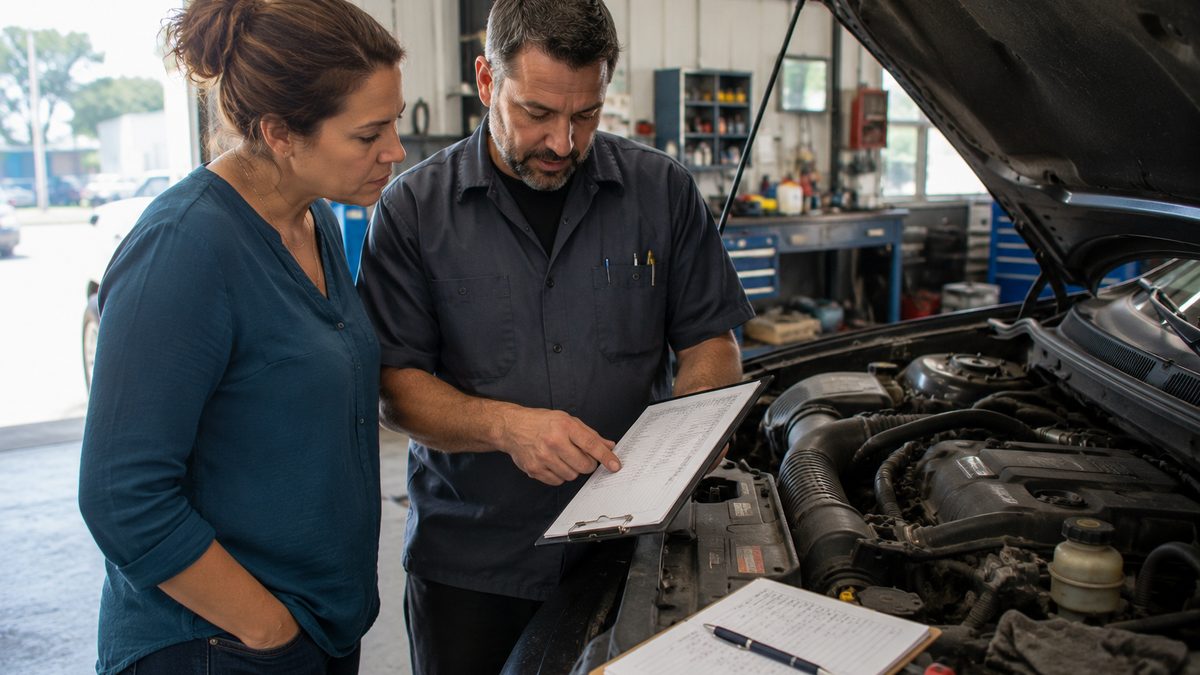
Understanding repair estimates and warranties can help drivers make more informed decisions before approving work. Editorial illustration by TheDailyGlobe.
Key Facts
- The FTC recommends asking for a written estimate before authorizing repairs whenever possible.
- Consumers should understand diagnostic fees, labor charges, parts, warranties, and whether additional approval is required before extra work begins.
- Vehicle warranties and service contracts are different products and provide different types of coverage.
- Some service contracts may duplicate existing warranty coverage or provide less value than consumers expect.
- Most repair shops are legitimate businesses, but understanding the repair process can help consumers avoid unnecessary surprises.
When your car suddenly needs repairs, it rarely happens at a convenient time. Maybe you rely on it to get to work, pick up your children, or make medical appointments. Standing at a repair counter with an estimate full of unfamiliar terms can leave even experienced drivers wondering whether they are making the right decision. The Federal Trade Commission says the best way to avoid repair problems is to prepare before they happen and understand what questions to ask.
Start With the Estimate
Before authorizing repairs, ask whether the shop will provide a written estimate. A detailed estimate should identify the work being recommended and explain the expected charges for labor and parts. If something is unclear, ask for an explanation before signing anything. Understanding the estimate now is much easier than trying to resolve confusion after the work has already been completed.
It is also worth asking whether the shop will contact you before performing additional repairs that were not included in the original estimate. Unexpected problems sometimes appear after technicians begin diagnosing a vehicle, but knowing whether your approval will be required can help prevent misunderstandings.
Ask About Diagnostic Fees and Parts
Modern vehicles often require diagnostic testing before technicians can determine what needs to be repaired. The FTC notes that diagnostic work has value because it helps identify the underlying problem. Ask whether there is a diagnostic fee, whether that fee is applied toward the repair if you approve the work, and what happens if you decide not to proceed.
Drivers may also want to ask whether replacement parts are new, rebuilt, reconditioned, or used. Depending on the repair, different options may be available. Understanding those choices can help consumers balance cost, warranty coverage, and expected performance.
Know What the Warranty Covers
A repair warranty is not always the same as a vehicle warranty. Ask whether the repair shop guarantees its labor, the replacement parts, or both, and how long that coverage lasts. Having those details in writing can make future warranty questions easier to resolve if a problem returns.
The FTC also reminds consumers that vehicle warranties and service contracts are different. A manufacturer's warranty is included with many new vehicles, while a service contract is typically purchased separately and may cover certain repairs after the original warranty expires.
Be Careful With Extended Warranty Offers
Extended warranty advertisements and service contract offers have become common, especially through mail, phone calls, email, and text messages. The FTC warns that some sales pitches can be misleading or even fraudulent. Consumers should understand exactly what is covered, what exclusions apply, and whether they may already have similar protection through an existing warranty.
In some cases, a service contract may provide useful protection. In others, it may duplicate coverage that already exists or cost more than the value of the repairs it ultimately pays for. Reading the contract carefully before purchasing can help avoid expensive surprises later.
A Second Opinion Can Be Worth the Time
If a repair estimate seems unusually high or recommends extensive work that you do not understand, asking another qualified repair shop for a second opinion may provide additional confidence. That does not necessarily mean the first estimate was unreasonable. Vehicle repairs can vary depending on labor rates, parts availability, and the condition of the vehicle. Comparing professional opinions may simply help you better understand your options.
The FTC does not suggest assuming repair shops are dishonest. Most mechanics are performing skilled technical work on increasingly complex vehicles. But asking informed questions, understanding estimates before approving repairs, and knowing the difference between warranties and service contracts can help consumers make decisions with greater confidence the next time an unexpected repair bill lands on the counter.
Reporting note: Reporting draws on Federal Trade Commission consumer guidance covering auto repair basics, vehicle warranties, service contracts, and consumer protection information. This article was produced with AI-assisted research and reviewed by an editor before publication.