Zines Are Giving Libraries a Handmade Answer to Digital Culture
Libraries are collecting and teaching zines as low-cost, handmade publishing tools that preserve local voices in a digital-heavy culture.
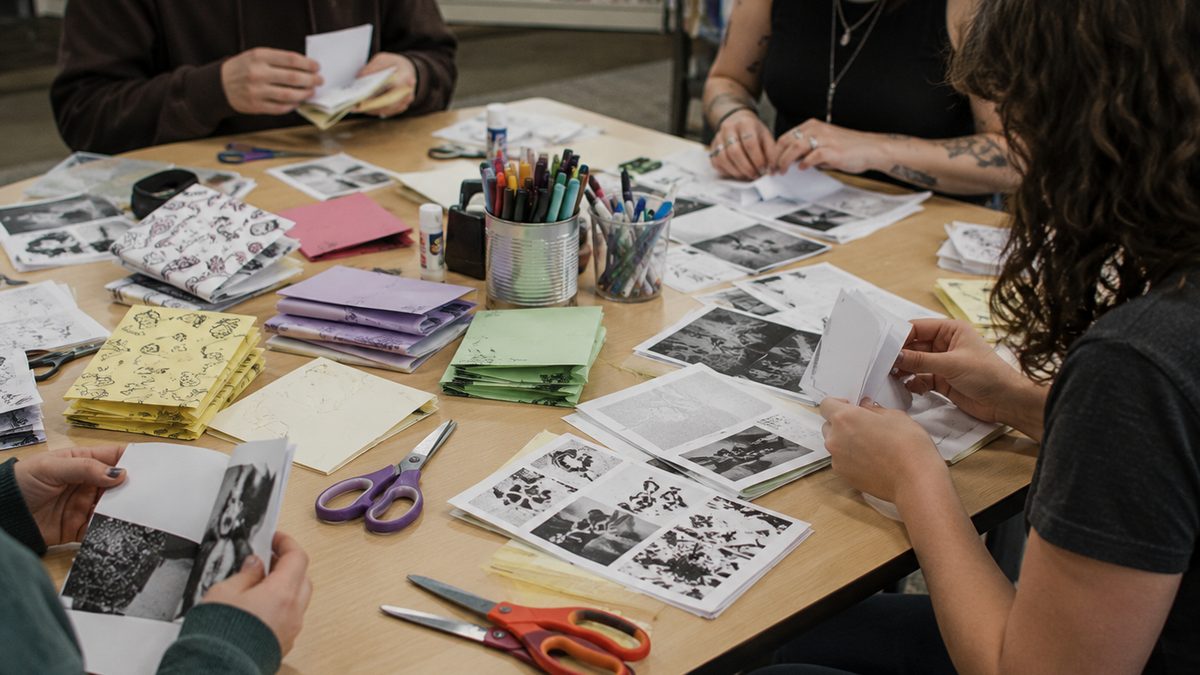
Zines give libraries and readers a low-cost way to preserve handmade voices in a digital culture. Editorial illustration by TheDailyGlobe.
Key Facts
- ALA/ACRL describes zines as low-cost, self-published media.
- Zine Pavilion is scheduled to return during the 2026 ALA Annual Conference in Chicago.
- Los Angeles Public Library maintains zine library collections.
- ALA has published guidance on selecting, purchasing and processing zines in library collections.
- It remains unclear how many U.S. public libraries currently maintain zine collections.
A zine can start with a folded sheet of paper on a library table. Add scissors, tape, a marker, a photocopier and something to say. By the end, a person who may never work with a publisher can still hold a small publication in their hands.
That handmade quality is the point. In a culture where so much expression moves through screens, feeds and platforms, zines offer a slower, cheaper and more personal route. They are not new, and they are not trying to compete with the internet at internet scale. Their value is different: they make publishing feel local, physical and possible.
Libraries are part of that story. American Library Association and ACRL materials describe zines as low-cost, self-published media. The Los Angeles Public Library maintains zine library collections, and ALA has published guidance for libraries on selecting, purchasing and processing zines. Zine Pavilion is also scheduled to return during the 2026 ALA Annual Conference in Chicago, showing continued library-world attention to the form.
What a Zine Actually Is
A zine is usually a small, self-published work made outside traditional publishing channels. It may be photocopied, hand-folded, stapled, drawn, typed, collaged or assembled from a mix of images and text. Some look polished. Others look intentionally rough. Many are made in small batches.
The format has deep do-it-yourself roots. Zines have long been used by artists, music scenes, activists, fans, students and people who wanted to make something without asking permission from a publisher, company or institution. A zine can be personal, funny, political, practical, poetic or local.
That range is part of the appeal. A zine does not need to be a book, magazine or professional art object. It can be a recipe collection, a neighborhood history, a comic, a field guide, a grief journal, a fan essay, a youth art project or a set of drawings about everyday life.
Why Libraries Are a Natural Home
Libraries already exist to collect, preserve and share information. Zines fit that mission in a different way than books from major publishers. They can capture voices, scenes and experiences that may never show up in a commercial catalog.
That matters because culture is not only made by famous writers, national outlets or large institutions. It is also made by people documenting their own neighborhoods, families, identities, jokes, hobbies and concerns. A library zine collection can preserve some of that material before it disappears.
ALA guidance on zines in library collections points to the practical side of the work: selecting, purchasing and processing zines. That matters because bringing handmade materials into a library is not as simple as putting them on a shelf. Libraries have to think about cataloging, access, preservation and how to respect creators whose work may be personal or locally distributed.
A Low-Cost Way to Make Culture
Zines are appealing because the barrier to entry is low. A person does not need expensive software, a large audience or professional design skills. Paper, copies and a clear idea can be enough.
That makes zines especially useful in library workshops, classrooms and community spaces. The act of making one is easy to explain: fold the page, plan the panels, add words or images, copy it, share it. The result is physical and immediate, which can be powerful for people used to watching their creative work disappear into a feed.
For young people, zines can make authorship feel reachable. For local artists, they can be a small-format way to test ideas. For community groups, they can preserve stories or instructions without waiting for a grant, publisher or large event.
The Digital Contrast
Zines do not reject digital culture as much as they offer a different rhythm. Online posting is fast, searchable and easy to share widely. It is also crowded, temporary and shaped by platforms that decide what people see.
A zine moves differently. It has to be made, copied, handed over, mailed, shelved or traded. That slower path can make the work feel more intentional. It also gives the reader a different relationship to the creator. A small folded booklet feels less like content and more like an object someone made.
That does not make zines better than digital publishing in every way. Their reach is smaller. They can be harder to find. They may be fragile or difficult to preserve. But those limits are also part of what makes libraries important in the zine world. A library can help keep small-run work from vanishing.
What Not to Overstate
Zines should not be treated as a brand-new trend. They have older roots, and many communities have used them for decades. The current library interest is better understood as part of an ongoing relationship between DIY publishing, local archives and accessible art.
It is also unclear whether zine programming is growing faster in public libraries, academic libraries or independent art spaces. The available materials show active library involvement and continuing professional attention, but they do not prove a nationwide surge in every kind of library.
That caution matters because zines work best when described plainly. They are not a magic fix for digital overload. They are not a mass replacement for books, magazines or online publishing. They are one modest, durable way for people to make and share culture on their own terms.
Why Handmade Publishing Still Has Power
The lasting power of zines is that they make expression feel possible. A person can make something small, specific and honest without waiting to be chosen. A library can collect that work and say it belongs in the cultural record.
That is a quiet but meaningful answer to a digital-heavy world. Not everything needs to be optimized, monetized or pushed through an algorithm to matter. Some ideas are meant to be folded, copied, passed hand to hand and saved in a box or on a shelf.
The next thing to watch is how libraries continue to handle the practical work: collecting zines respectfully, teaching people how to make them, preserving fragile materials and making room for local voices that might otherwise be missed. In that sense, the humble zine is more than paper. It is a reminder that culture can still be handmade.
Reporting note: Reporting draws on American Library Association and ACRL materials, Zine Libraries event information, Los Angeles Public Library zine collection materials, and reviewed background context. This article was produced with AI-assisted research and reviewed by an editor before publication.