Why Jigsaw Puzzles Keep Finding Their Way Back to American Homes
Every new form of entertainment seems ready to replace jigsaw puzzles. Yet they continue bringing families together one piece at a time.
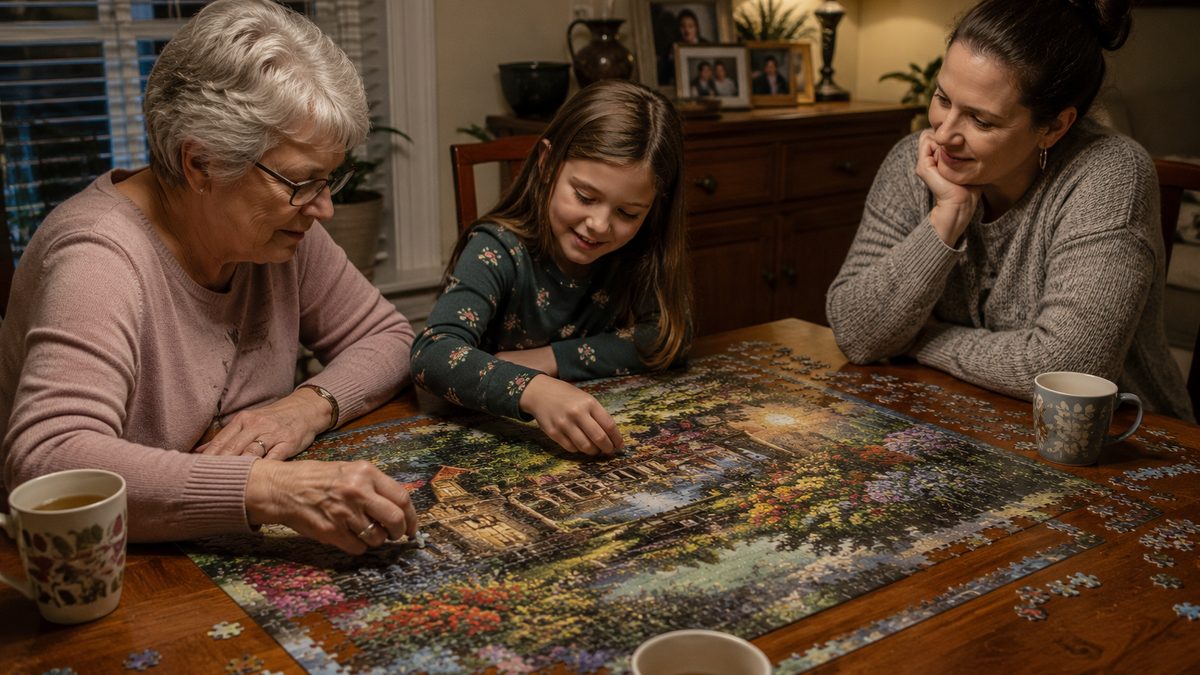
Jigsaw puzzles continue bringing families of different ages together through a hobby that rewards patience and conversation. Editorial illustration by TheDailyGlobe.
Key Facts
- Jigsaw puzzles remain a popular family activity across multiple generations.
- Industry organizations continue to identify puzzles as a steady category within the toy and hobby market.
- Puzzles require no internet connection, batteries, or software updates.
- Families often use puzzles as a shared activity that encourages conversation and cooperation.
- Competitive puzzle events have also helped introduce the hobby to new audiences.
Walk into many homes during the holidays, on a rainy weekend, or while a family is spending time together, and there is a good chance a jigsaw puzzle is spread across a table. Someone is sorting edge pieces. Someone else insists the missing blue piece was just there a minute ago. The television may be off, but conversation rarely is.
It is an ordinary scene that has survived decades of changing technology. Video games, streaming services, smartphones, and social media have all transformed how people spend their free time. Yet jigsaw puzzles continue to attract new fans while holding onto generations of longtime enthusiasts.
A Hobby That Welcomes Everyone
Few hobbies are as flexible as a jigsaw puzzle. Young children can match colors and simple shapes. Teenagers can work on difficult sections. Parents can stop for dinner and return later. Grandparents often bring years of patience and experience to the table.
Unlike many games, puzzles rarely require everyone to participate at the same time. People can come and go throughout the day, adding a few pieces before moving on to something else. That makes them well suited to busy households where schedules rarely line up perfectly.
There is also very little pressure. Nobody loses because another family member found more pieces. Everyone is working toward the same finished picture.
Conversation Comes Naturally
Many family activities compete with conversation. A movie encourages silence. Individual phone screens separate attention. Even board games often focus on strategy or winning.
Puzzles create a different rhythm. Hands stay busy while conversations unfold naturally. Families talk about school, work, vacations, sports, neighborhood news, or plans for the weekend while searching for the next piece. Long pauses feel comfortable rather than awkward because everyone is focused on the same shared task.
That combination of quiet concentration and easy conversation helps explain why puzzles have remained a familiar tradition for so many households.
The Satisfaction of Small Progress
Modern life often feels filled with unfinished work. Emails continue arriving. Household chores never completely disappear. News updates refresh constantly.
A puzzle offers something increasingly rare: a project with a clear beginning, middle, and end. Every correctly placed piece provides visible progress, and eventually the final gap disappears. The completed image offers a simple sense of accomplishment that many everyday tasks do not.
Even large puzzles reward patience rather than speed. There is no expectation that they must be finished in one sitting. Families may leave a puzzle on a table for days or even weeks, returning whenever time allows.
Technology Hasn't Replaced the Experience
Digital puzzle apps have become common, and many people enjoy solving puzzles on phones or tablets. Those versions offer convenience and unlimited designs, but they provide a different experience from gathering around a physical table.
A cardboard puzzle creates opportunities for cooperation that are difficult to recreate on a screen. Two people may search different sections before helping each other fit a difficult piece. Someone notices a color pattern another person overlooked. The finished picture becomes something the whole family completed together.
That shared accomplishment is one reason physical puzzles continue finding new audiences even as entertainment options continue expanding.
A Hobby That Keeps Evolving
Puzzle competitions, specialty artwork, and increasingly varied puzzle themes continue introducing the hobby to new participants. Some enjoy traditional landscapes, while others prefer maps, famous paintings, wildlife, or original illustrations. The growing variety means families can often find puzzles that match their own interests.
It remains unclear exactly how puzzle popularity will change over the next decade as entertainment habits continue evolving. But their staying power across multiple generations suggests they offer something technology alone has not replaced.
A jigsaw puzzle asks for patience, attention, and a little teamwork. In return, it offers conversation, shared memories, and the quiet satisfaction of seeing hundreds of separate pieces slowly become one complete picture. That simple formula has survived every generation of new technology—and shows little sign of disappearing anytime soon.
Reporting note: Reporting draws on Toy Association trend reporting, Ravensburger market information, American Puzzle Competition resources, and reviewed background materials. This article was produced with AI-assisted research and reviewed by an editor before publication.