Why Handwritten Recipe Cards Become Some of a Family's Most Valuable Keepsakes
A stained recipe card may not look valuable, but for many families it preserves memories, handwriting, and traditions that no digital cookbook can replace.
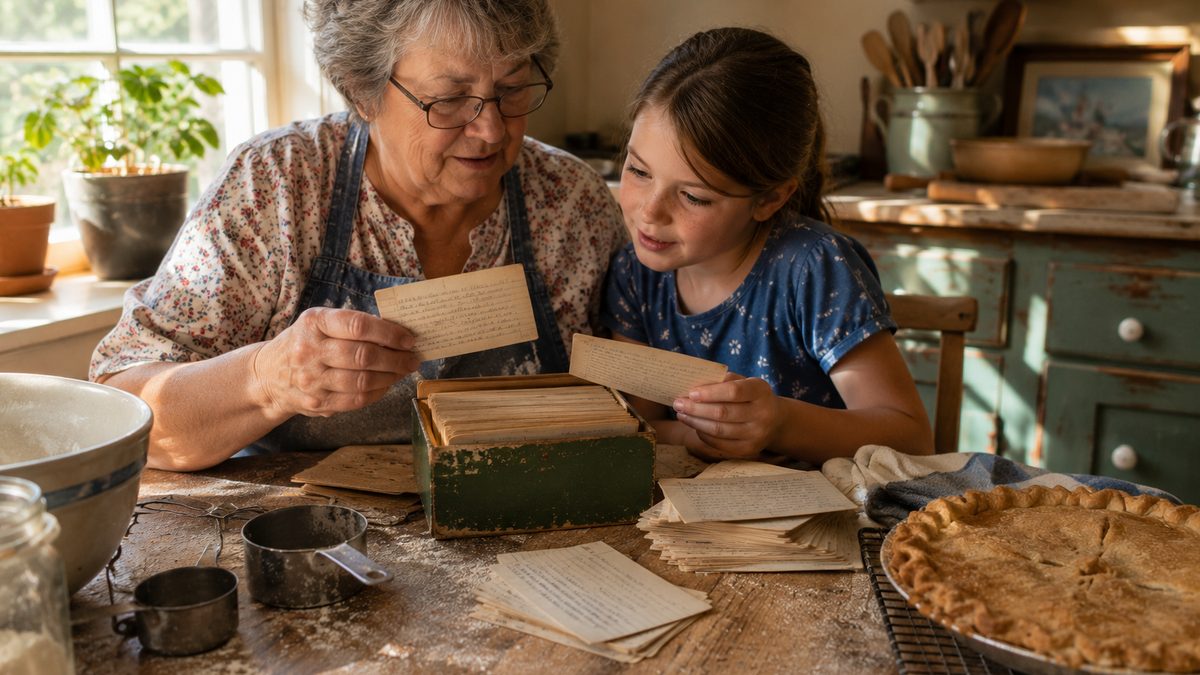
Handwritten recipe cards often preserve family stories, traditions, and personal history alongside favorite meals. Editorial illustration by TheDailyGlobe.
Key Facts
- Handwritten recipe cards often preserve family history alongside cooking instructions.
- Historical collections and museums continue preserving family recipes as records of everyday American life.
- Many recipe cards include handwritten notes, substitutions, and serving traditions that never appear in published cookbooks.
- Family recipes are commonly passed from one generation to the next through handwritten collections.
- Experts recommend preserving original recipe cards while making digital copies for long-term access.
Every family seems to have one. It might be tucked inside a recipe box, folded into an old cookbook, or protected in a plastic sleeve after years of use. The card may have faded ink, food stains, or handwritten notes squeezed into the margins. It may not look important to anyone outside the family, but for the people who inherit it, it often becomes priceless.
A handwritten recipe card is more than a list of ingredients. It captures a person's handwriting, small habits, favorite measurements, and the traditions that surrounded family meals. Long after the cook is gone, those small details can keep part of that person's everyday life alive.
More Than Instructions
Most recipes can be found online within seconds. Thousands of cookbooks offer versions of chocolate chip cookies, meatloaf, cornbread, barbecue sauce, and apple pie. What cannot be recreated as easily is the personal story written into an old recipe card.
A recipe that simply says 'add enough flour until it feels right' reflects experience that developed over years in one kitchen. A note reading 'Dad likes extra pepper' or 'double this for Christmas' tells future generations something about the family itself, not just the meal.
Those personal touches explain why many families hold onto handwritten recipes even after creating digital collections. The information matters, but so does the person who wrote it.
Everyday History Worth Saving
Libraries, museums, and historical organizations increasingly recognize that family recipes document everyday life in ways official records often cannot. They show how people cooked, celebrated holidays, adapted to local ingredients, and passed traditions from one generation to the next.
Unlike formal history books, recipe collections reveal ordinary moments. They reflect neighborhood gatherings, church dinners, birthdays, reunions, and weeknight family meals. They also show how recipes changed over time as ingredients became easier to find or families adjusted dishes to suit new tastes.
That makes recipe cards valuable not only to individual families but also to historians interested in understanding how Americans lived, cooked, and shared meals across different communities and regions.
The Handwriting Matters Too
For many people, seeing a parent's or grandparent's handwriting can be just as meaningful as reading the recipe itself. The familiar loops of a signature, a crossed-out ingredient, or a quick reminder written in the margin can bring back memories that typed text never could.
Handwriting reflects personality. Some cards are carefully organized with perfect measurements. Others include corrections, coffee stains, or notes added during years of family dinners. Those imperfections become part of the keepsake rather than flaws to erase.
As more communication moves to phones and computers, handwritten family documents may become even more meaningful because they preserve something uniquely personal.
Keeping Family Recipes Safe
Preserving recipe cards does not require expensive equipment. Archivists generally recommend storing originals in a cool, dry place away from direct sunlight and avoiding unnecessary handling if paper has become fragile. Protective sleeves or archival-quality storage boxes can help prevent additional wear.
Many families also create high-quality digital scans or photographs of their recipes. Digital copies make it easier to share recipes with relatives while protecting the originals from everyday kitchen spills and repeated handling.
Some families go a step further by recording the stories behind favorite recipes while older relatives are still available to tell them. Knowing who first made a dish, when it was traditionally served, or why certain ingredients changed over time can preserve memories that may otherwise be lost.
A Tradition That Keeps Growing
It remains unclear how future generations will preserve family recipes as more cooking moves to digital apps and online collections. Some traditions will likely evolve, while others may shift entirely to shared family documents stored electronically.
Even so, handwritten recipe cards continue offering something technology cannot fully replace. They preserve the small details of ordinary lives—meals shared around kitchen tables, family celebrations, and the familiar handwriting of someone who once stood at the stove making dinner.
Long after the ingredients have changed and the cookware has been replaced, those simple index cards often remain. They remind families that recipes are not only about feeding people. They are also about remembering the people who first made them.
Reporting note: Reporting draws on Library of Congress food collections, Smithsonian food history resources, Southern Foodways Alliance archives, and reviewed background materials. This article was produced with AI-assisted research and reviewed by an editor before publication.