Small-Space Gardening Is Making Patios and Balconies More Useful
Container gardening is helping renters, apartment dwellers and small-home households make patios, balconies and porches more useful without needing a full yard.
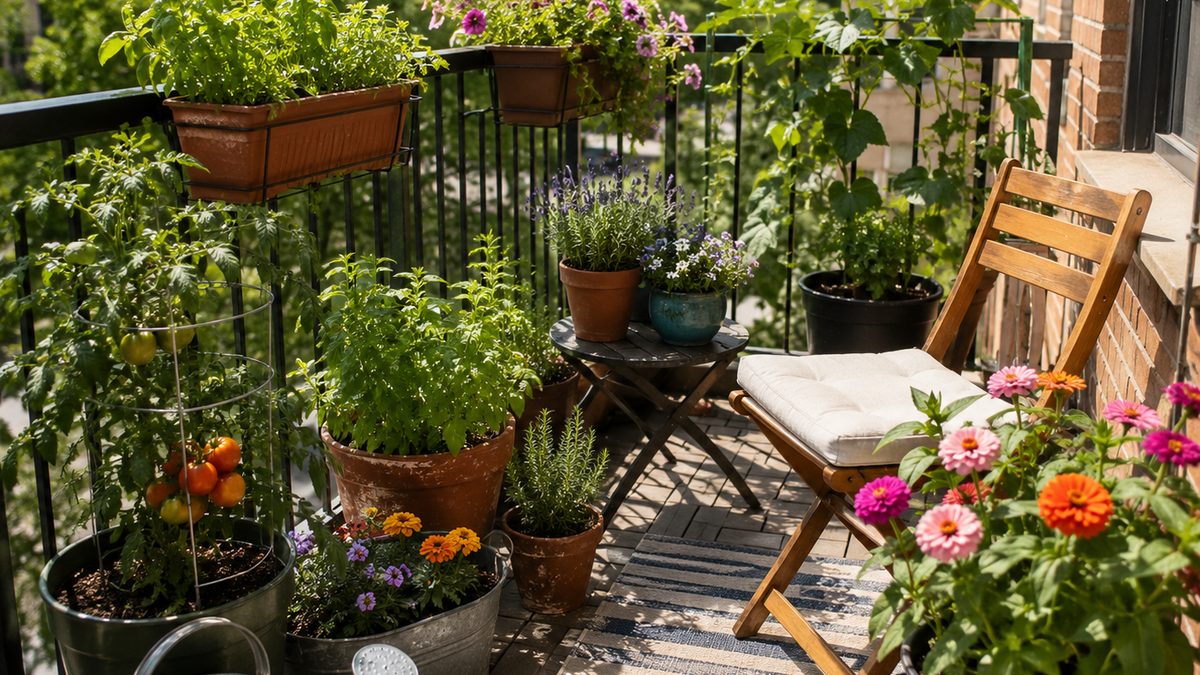
Container gardening lets renters and small-space households turn patios, balconies, and entryways into useful seasonal spaces. Editorial illustration by TheDailyGlobe.
Key Facts
- The 2026 National Gardening Survey covers container gardening, edible gardening, houseplants and consumer gardening trends.
- Garden.org says the 2026 survey includes activity-specific trends and demographic breakdowns.
- Recent lifestyle coverage has highlighted container gardening as a practical method for small spaces.
- It remains unclear how much container gardening participation is driven by renters versus homeowners.
- Regional climate, sunlight, watering access and apartment rules can affect whether small-space gardening is practical.
A small balcony can feel like wasted space if all it holds is a chair, a broom and whatever the wind left behind. But add a few herb pots, a tomato container, flowers by the door and a watering can, and the same few square feet can start to feel like part of the home.
That is the appeal of small-space gardening. It does not require a big backyard, a shed full of tools or a weekend landscaping budget. For renters, apartment dwellers and small-home owners, container gardening offers a practical way to make patios, balconies, porches and entryways more useful during the growing season.
The 2026 National Gardening Survey covers container gardening, edible gardening, houseplants and consumer gardening trends. Garden.org says the 2026 survey includes activity-specific trends and demographic breakdowns, while recent lifestyle coverage has highlighted container gardening as a practical method for people working with limited outdoor room.
Why Containers Fit Modern Housing
Many people do not have the kind of yard that older gardening advice assumes. Some live in apartments. Some rent homes where digging into the yard is not allowed. Some have only a porch, a landing, a shared courtyard or a thin strip of sun near a doorway.
Containers fit those realities because they are movable, limited in scale and easier to start. A person can grow herbs in a pot, flowers in a planter or tomatoes in a larger container without changing the property itself. If the setup does not work, it can usually be moved or scaled back.
That flexibility is part of why container gardening keeps showing up in gardening and lifestyle coverage. It lets people try gardening without committing to a full landscape project. It also makes outdoor space feel more lived-in, even when the space is small.
Food, Flowers and a Better Front Door
Small-space gardening can serve several purposes at once. Some people want herbs for cooking. Some want tomatoes, peppers or greens. Some want flowers by the door because they make an apartment entry, patio or porch feel less bare.
The value is not only the harvest. A few plants can create a seasonal routine: watering in the morning, checking leaves after work, cutting basil before dinner or moving a pot out of harsh afternoon sun. Those small habits can make a space feel cared for.
That does not mean container gardening should be oversold as a guaranteed way to save money on groceries. A few pots can produce useful herbs or vegetables, but soil, containers, watering needs and plant losses all matter. For many households, the benefit is a mix of fresh food, beauty, routine and the satisfaction of growing something close to home.
The Small-Space Limits Are Real
Not every balcony or patio is right for gardening. Sunlight is often the first limit. Some spaces get too little direct light for vegetables. Others get intense heat that dries containers quickly. Wind can also be a problem on higher balconies.
Water access matters, too. A person with a hose nearby has a different setup than someone carrying water through an apartment. Containers can dry out faster than in-ground beds, especially in summer, so a small garden can become frustrating if watering is difficult.
Rules are another important limit. Some renters may not be allowed to hang planters, place heavy pots on balconies or use shared outdoor areas. Apartment and condo rules can vary, and regional climate affects what can grow and when. A practical small garden starts by checking the space before buying too much.
How to Think About a First Setup
The easiest first step is to choose one purpose. A person who cooks often might start with herbs. Someone who wants color may choose flowers. Someone with enough sun and a larger container may try a tomato plant or another edible plant suited to pots.
The next step is to match the plant to the space. A sunny patio gives more options than a shaded entryway. A balcony with limited room may work better with a few sturdy containers than with many small pots that need constant attention.
Container size also matters. Small pots can look simple but dry quickly. Larger containers may support healthier plants, but they can be heavy and harder to move. For renters or apartment dwellers, weight, drainage and where the water goes are part of the decision.
Avoiding the Luxury Patio Trap
Small-space gardening does not need to become expensive home-design content. The point is not to create a perfect outdoor room for photographs. The point is to make the space more useful and pleasant in a way that fits the household.
A few practical containers can do that. So can reused pots, a simple chair, a watering can and plants that are forgiving enough for a beginner. The best version is not necessarily the most styled version. It is the one a person can maintain.
That matters because outdoor space is part of home culture, even when it is small. A balcony, stoop, patio or porch can become a place to sit, grow, water, snack, read or step outside for a few minutes. It does not have to be large to matter.
Why Small Spaces Still Count
The renewed attention around container gardening is a reminder that home life is not only shaped by square footage. People make meaning out of whatever space they have, especially when housing costs, renting and smaller homes limit what is possible.
A container garden will not solve every problem. It will not turn every balcony into a farm or every patio into a food source. But it can make a small outdoor area feel less like leftover space and more like a useful part of daily life.
The next thing for readers to watch is not whether small-space gardening becomes a polished trend, but whether it stays practical. The best version is simple: a few plants that fit the light, rules and budget, and a small corner of home that finally gets used.
Reporting note: Reporting draws on the 2026 National Gardening Survey, Garden.org survey materials, recent lifestyle coverage of container gardening methods, and reviewed background context. This article was produced with AI-assisted research and reviewed by an editor before publication.