Seed Swaps Turn Gardening Into a Low-Cost Community Habit
Seed swaps give gardeners a simple way to trade seeds, share local knowledge and keep planting traditions alive without turning gardening into an expensive hobby.
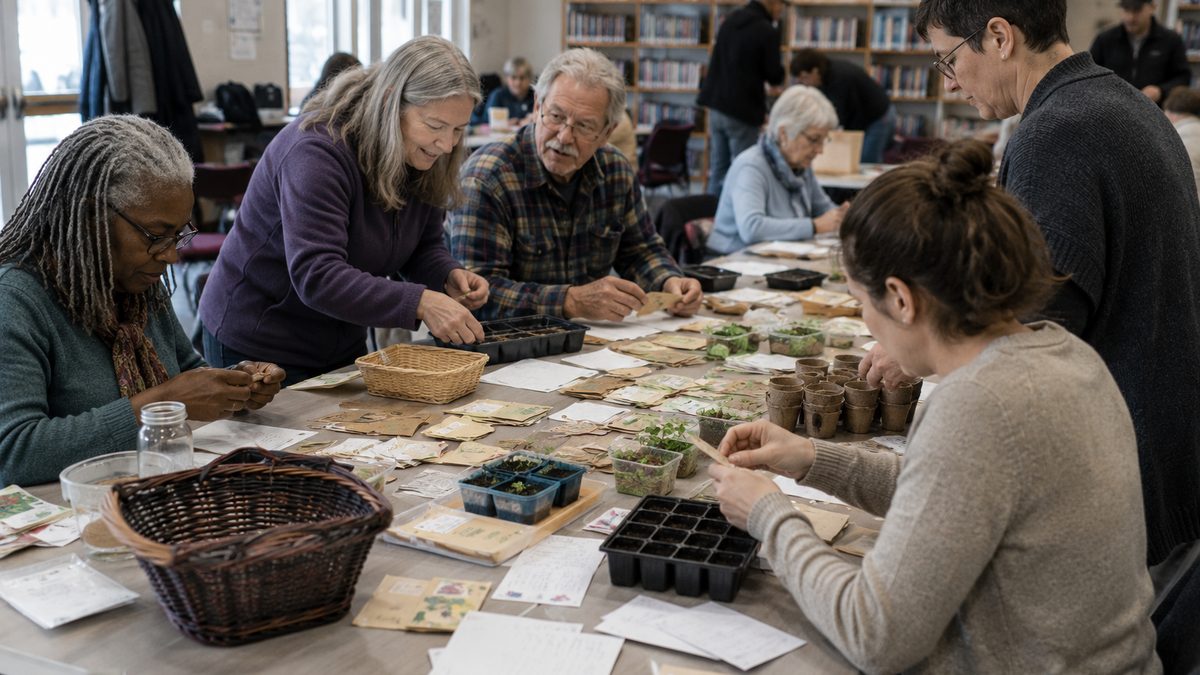
Seed swaps help gardeners trade seeds, compare growing advice, and keep local planting traditions moving from one household to another. Editorial illustration by TheDailyGlobe.
Key Facts
- Seed swaps allow gardeners to trade seeds, plants and growing advice in a community setting.
- Guides to seed and plant swaps emphasize clear labeling, shared expectations and welcoming both new and experienced gardeners.
- Seed exchanges can help gardeners find heirloom, locally adapted or unusual varieties they may not see in ordinary store displays.
- Local seed swaps are often hosted by community groups, libraries, gardening clubs or local organizers.
- The benefits are practical and cultural, but claims about major food savings or climate impact should not be overstated without stronger evidence.
A seed swap starts with a small, practical idea: someone has more seeds than they need, and someone else has room in the garden. Put those people together at a library, community center, church hall, school or neighborhood table, and gardening becomes less of a solo hobby and more of a shared habit.
That is the appeal behind seed swaps, which bring gardeners together to trade seeds, plants and advice before the growing season. The setup can be simple. People bring saved seeds or extra packets, label what they have, look through what others brought and leave with something new to try.
For readers who want to garden without spending heavily, the idea is easy to understand. Seed swaps can lower the cost of experimenting, connect beginners with experienced growers and keep local knowledge moving from one household to another.
How a Seed Swap Works
At its simplest, a seed swap is a trade. Gardeners bring seeds they saved from last season, extra packets they did not use, or sometimes young plants and cuttings. Other people do the same. The group then shares what is available.
The best swaps are usually organized enough to avoid confusion but casual enough that beginners do not feel out of place. Seeds are often labeled with the plant name, variety, growing notes and, when known, the year they were saved. Some organizers set rules about taking only what someone can reasonably use, while others encourage open sharing.
The exchange is only part of the value. A new gardener may leave with tomato seeds, but the more useful thing may be the neighbor explaining when to start them, which pests showed up last year or why one variety did better in the local soil than another.
Why Local Seeds Matter
Seed swaps often attract people interested in heirloom plants, unusual varieties and seeds that have been grown in the same area for years. Heirloom seeds are often valued because they carry a history: a family tomato, a regional bean, a flower passed along by neighbors or a vegetable variety that does not show up in every big-box rack.
Local experience matters because gardening is never only about the seed. It is also about weather, soil, pests, shade, timing and the habits of a particular place. A variety that grows well in one region may struggle somewhere else. A seed that has been saved and shared locally can come with practical knowledge attached.
That does not mean every swapped seed will thrive, or that local seeds are automatically better than store-bought packets. Gardening always includes trial and error. But a seed swap gives people a low-cost way to test what works, learn from others and keep useful varieties in circulation.
A Low-Cost Way to Try Gardening
Gardening can get expensive quickly if someone buys tools, soil, containers, seedlings, amendments and new packets every season. Seed swaps do not erase those costs. They do, however, make one part of gardening more accessible.
A beginner who is unsure whether they can grow lettuce, herbs, beans or flowers may be more willing to try if they can start with shared seeds and a few tips. Someone with a small yard, balcony or community garden plot can experiment without committing to a large order or a full packet of every plant.
For families watching household costs, that matters. The article should not promise that seed swaps will meaningfully cut a grocery bill. Growing food takes time, space, weather, water and patience. But seed swaps can make the first step cheaper and less intimidating.
The Community Part Is the Point
Seed swaps are also social in a quiet, useful way. They give people a reason to talk across age, income and experience. A retired gardener may know which beans handle a hot summer. A young renter may know which herbs work in containers. A parent may be looking for something easy to grow with children.
That kind of neighbor-to-neighbor knowledge is hard to replace with a product label. People can compare what grew, what failed, what tasted good, what needed too much water and what was worth planting again. The seed is the object being traded, but the real exchange is often memory, advice and encouragement.
Local events also help keep gardening from becoming a lifestyle brand reserved for people with perfect raised beds and expensive tools. A table full of seed packets sends a different message: bring what you have, take what you can use and try growing something.
What to Watch as Swaps Grow
The next question is whether more communities treat seed swaps as ordinary seasonal events, like book sales, farmers markets or neighborhood cleanups. Libraries, schools, gardening clubs and community groups are natural hosts because they already bring people together and often have space for practical public programs.
Organizers will also have to keep swaps clear and welcoming. Good labeling, basic expectations and beginner-friendly explanations can make the difference between a helpful event and a confusing table of mystery seeds.
For readers, the broader lesson is simple. Seed swaps are not just about getting free seeds. They are about making gardening easier to start, easier to share and more connected to the place where people actually live. In a culture where many hobbies can become expensive fast, that kind of low-cost community habit still has real appeal.
Reporting note: Reporting draws on gardening guidance, seed-exchange materials, local community reporting, and reviewed background materials. This article was produced with AI-assisted research and reviewed by an editor before publication.