Public Parks Are the Backyard Many Families Actually Use
For families without enough outdoor space at home, public parks can provide shade, playgrounds, picnic tables, trails and room to gather without spending much.
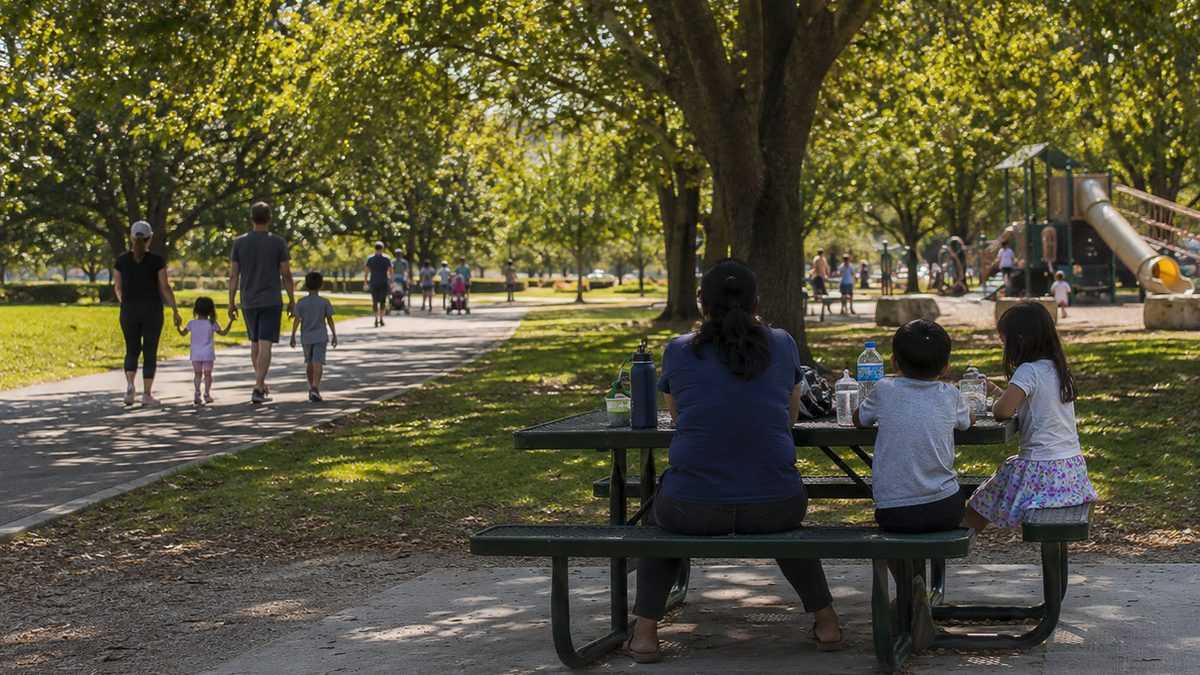
For many households, public parks serve as the shared backyard where daily life has room to spread out. Editorial illustration by TheDailyGlobe.
Key Facts
- NRPA's 2026 Agency Performance Review reported one park for every 2,437 residents served, based on NRPA Park Metrics data.
- NRPA describes Park Metrics as a benchmarking resource for park and recreation agencies.
- Trust for Public Land's 2026 ParkScore economic-benefit work says parks deliver public benefits tied to health, resilience, consumer value, economic development and civic engagement.
- Park quality, shade, safety, maintenance and access vary widely by community.
- A nearby park does not always mean the park is usable for every family.
A family that does not have a big yard still needs somewhere to go. The apartment may be too small for a birthday party. The porch may not have shade. The backyard may be mostly driveway, or there may be no yard at all. So the family packs snacks, finds a picnic table and lets the kids run toward the playground.
That is the everyday value of a public park. It is not only scenery or a line item in a city budget. For many households, the park is the shared backyard: a place to walk, sit, play, cool off, gather with relatives, throw a ball, push a stroller or spend a summer evening without buying a ticket.
The Public Backyard Is Practical
Parks matter most when they are ordinary and usable. A picnic table under a tree may not look like infrastructure, but it can make a weekend gathering possible for a family that does not have space at home. A playground can give children room to move when the living room is too small. A walking path can turn a stressful day into a half-hour outside.
That is why parks are part of everyday culture, not just recreation planning. They shape where families meet, where older adults walk, where neighbors see each other and where children learn a little independence. They are one of the few public places where a person can simply be there without needing to buy something.
For renters, apartment dwellers and families with small homes or crowded schedules, that matters. A park can stretch the home outward. It gives daily life room to breathe.
Parks Are Measurable Public Assets
The National Recreation and Park Association's 2026 Agency Performance Review reported one park for every 2,437 residents served, based on NRPA Park Metrics data. NRPA describes Park Metrics as a benchmarking resource for park and recreation agencies, giving local systems a way to compare staffing, facilities, acreage and services.
Those numbers do not tell the whole story, but they help show that parks are not just nice extras. They are public assets that communities can count, manage and evaluate. A city or county can ask whether it has enough park space, whether facilities are maintained and whether residents can actually use what exists.
Trust for Public Land's 2026 ParkScore economic-benefit work also frames parks as more than recreation. Its materials connect parks to public benefits tied to health, resilience, consumer value, economic development and civic engagement. That does not mean every park produces the same benefit in every place. It does mean parks are part of how communities function.
Access Is Not the Same as Quality
A park nearby is not automatically a park that works for families. A green space without shade may be hard to use in summer. A playground with broken equipment may not feel welcoming. A park across a busy road may be close on a map but difficult to reach with children.
Safety, maintenance, lighting, bathrooms, sidewalks, transit, benches and programming all affect whether people actually use a park. So does trust. Families may avoid a park if it feels neglected, isolated or poorly cared for, even if it is technically available.
That is the difference between park access and park usefulness. A community can have a park on paper while residents still lack a comfortable place to gather, walk or play. The public backyard only works when people can reach it, feel welcome there and count on it being cared for.
Why Ordinary Use Matters
The most important park uses are often the least dramatic. A grandparent watches a child climb a slide. Teenagers shoot baskets after school. A parent walks a stroller before dinner. Neighbors sit at a table while kids run between the grass and the swings.
Those moments do not always show up in big civic speeches, but they are part of what parks are for. They give families affordable space and help neighbors become familiar to one another. A park can turn people who live near each other into people who recognize each other.
That matters at a time when many public places are built around spending money. Parks give communities a different kind of place: open, shared and ordinary. Their value is not only in special events or major improvements, but in repeated use.
What Communities Should Watch
The key questions are not only how many parks a community has, but whether those parks are shaded, maintained, safe, reachable and useful to the people nearby. A playground, trail or picnic area only helps if families can realistically use it.
What remains unclear is how park quality and access vary from neighborhood to neighborhood in ways that affect daily life. Some communities have well-kept parks within walking distance. Others have limited space, poor maintenance or barriers that make parks harder to use.
The best parks are not always the biggest or most famous. Often, they are the ones close enough for an evening walk, comfortable enough for a picnic and familiar enough that children know the way to the swings. For many families, that is what a backyard is supposed to do. Public parks simply do it together.
Reporting note: Reporting draws on National Recreation and Park Association benchmark materials, NRPA Park Metrics data, Trust for Public Land ParkScore economic-benefit materials, and reviewed background materials. This article was produced with AI-assisted research and reviewed by an editor before publication.