Oral History Projects Help Families Save Stories Before They Disappear
Recording a parent, grandparent, veteran, teacher or longtime neighbor can turn everyday memories into records families and communities can keep.
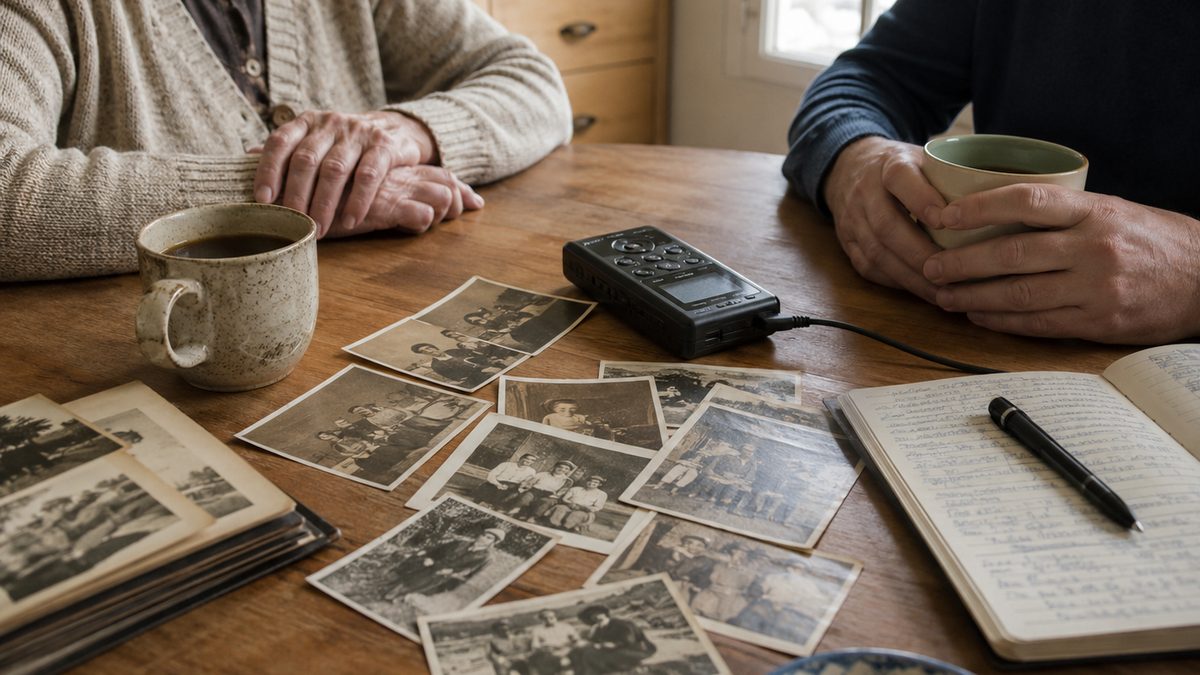
Oral history projects turn everyday memories into records families and communities can keep. Editorial illustration by TheDailyGlobe.
Key Facts
- The Library of Congress Veterans History Project collects, preserves and makes accessible firsthand recollections from U.S. military veterans.
- StoryCorps says it helps everyday Americans record, preserve and share stories.
- StoryCorps says recordings are preserved in its archive at the American Folklife Center at the Library of Congress.
- The Society of American Archivists maintains oral-history resources.
- It remains unclear how many family oral histories are recorded informally but never preserved long term.
Many families have a story they wish someone had recorded. A grandparent's childhood. A parent's first job. A veteran's service. A neighbor's memory of how the town used to look. For years, those stories may live in kitchen-table conversations, holiday visits and quick comments from the back seat of a car. Then, one day, the person who knew the details is no longer there to ask.
Oral history projects are a simple answer to that loss. They give structure to something families already do: ask questions, listen and save what matters. The goal is not to turn every home into an archive. It is to make sure important voices are not left only to memory.
What Oral History Projects Do
An oral history is more than a casual recording. At its best, it is a guided conversation that captures a person's memories in their own voice, along with enough context for others to understand and preserve it later.
That context matters. A recording with only a vague label may be meaningful to one generation and confusing to the next. A recording with the person's full name, date, place, interviewer, topic and permission to share is much easier for a family, school, library or archive to use.
The Society of American Archivists maintains oral-history resources because preserving spoken memories involves more than pressing record. Families and communities also have to think about storage, consent, transcripts, photos, names, dates and how the material should be shared.
National Projects Show the Value of Voice
The Library of Congress Veterans History Project offers one of the clearest examples of why oral history matters. The project collects, preserves and makes accessible firsthand recollections from U.S. military veterans. That work recognizes that military history is not only found in official documents. It is also found in the voices of people who lived through service, deployment, return home and the long aftermath of those experiences.
StoryCorps has built a broader public model around the same basic idea. It says it helps everyday Americans record, preserve and share stories, and that recordings are preserved in its archive at the American Folklife Center at the Library of Congress.
Those national projects matter because they show that ordinary voices can become part of the record. A veteran, teacher, nurse, factory worker, farmer, pastor, coach, parent or longtime neighbor may hold memories that explain a community better than any official timeline can.
Families Can Start Small
A family does not need a formal program to begin. It can start with one conversation. Ask a parent where they grew up. Ask a grandparent what school was like. Ask a veteran what they want younger family members to understand. Ask a retired teacher what changed in the classroom. Ask a longtime neighbor what the street looked like before the new buildings went up.
The most useful questions are often plain ones. Where were you? Who was there? What did a normal day look like? What do people misunderstand about that time? What do you wish someone had asked you earlier?
The practical step is to save the conversation in a way someone else can find later. Label the file. Write down the date. Keep related photos together. Note who gave permission for the recording and how it may be shared. Back it up somewhere safer than one phone.
Not Every Story Is Easy
Oral history should be handled with care, especially when the stories involve war, grief, family conflict, migration, discrimination, illness or trauma. Not every memory is simple, happy or ready to be recorded. Some people may want to talk. Others may not. Some may want parts kept private.
That does not make the work less important. It means respect has to come before preservation. The person telling the story should understand why it is being recorded, who may hear it and whether they can stop or skip questions.
For veterans and others who have lived through difficult events, listening well may matter more than getting a complete account. The purpose is not to extract a perfect story. It is to give someone control over what they want remembered.
Why Memory Needs Structure
What remains unclear is how many family oral histories are recorded informally but never preserved. Many families have voice memos, videos, photo boxes and handwritten notes scattered across phones, drawers and old computers. The memories may exist, but not in a form future relatives can easily understand.
That is where a little structure helps. A recording becomes more valuable when it is named, dated, backed up and connected to the people and places it describes. A transcript can make it searchable. A short note can explain why the story mattered. A folder of photos can help children and grandchildren put faces to names.
Oral history does not have to be grand to be worth saving. A story about a first apartment, a family recipe, a military unit, a school bus route, a church basement, a factory floor or a neighborhood store can carry the texture of a life. Families lose those details quietly when they wait too long.
The best time to ask is usually before the moment feels urgent. Sit down, press record, ask gently and listen. Memory lasts longer when someone gives it a place to live.
Reporting note: Reporting draws on Library of Congress Veterans History Project materials, StoryCorps program materials, Society of American Archivists oral-history resources, and reviewed background materials. This article was produced with AI-assisted research and reviewed by an editor before publication.