Mending Clothes Is Becoming Practical Again
Small clothing repairs are finding new life as households look for practical ways to stretch budgets, keep favorite pieces and waste less.
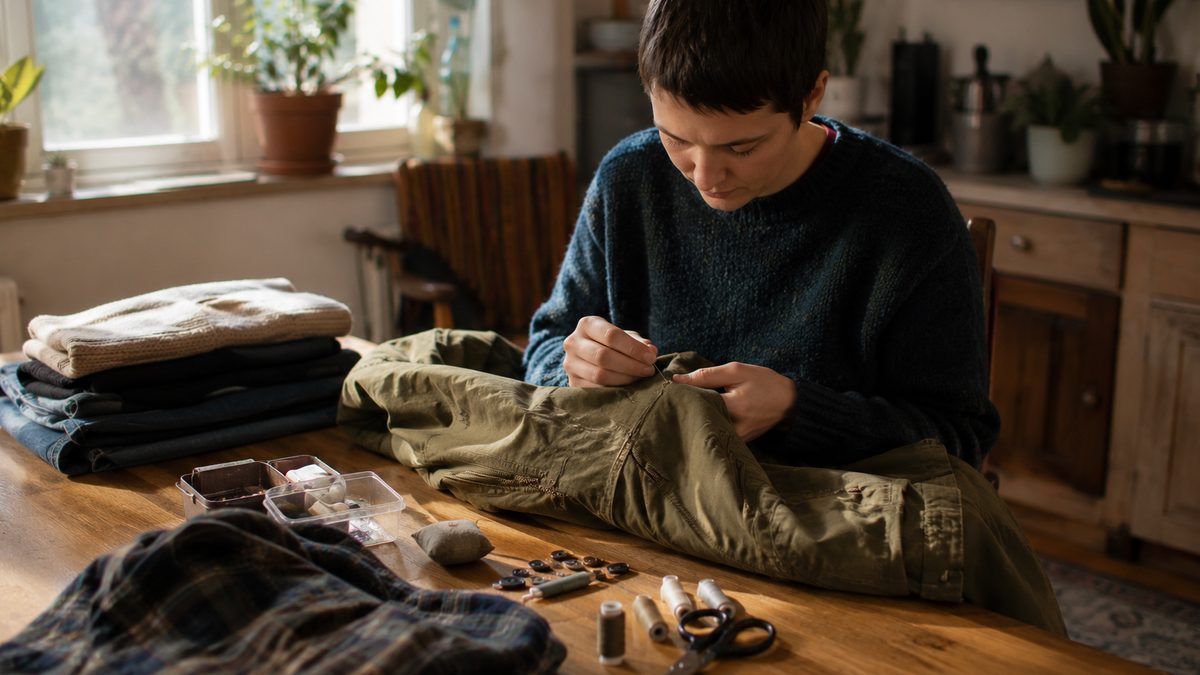
Small clothing repairs can help households keep useful clothes in rotation longer. Editorial illustration by TheDailyGlobe.
Key Facts
- Mending focuses on practical clothing repairs such as buttons, hems, patches, small tears and worn seams.
- Tailoring, alterations and mending services are drawing attention as more households look for ways to extend the life of clothes.
- Visible mending turns repairs into a design choice instead of trying to hide every patch or stitch.
- Clothing repair can be done at home, through local tailors or through specialized mending services, depending on the item and the repair.
- Mending is not a replacement for buying new clothes when needed; it is one practical option for keeping useful pieces longer.
A missing button used to be a small errand, not a reason to give up on a shirt. A fallen hem, a torn pocket or a worn elbow could be repaired at home, taken to a tailor or handed to someone in the family who knew what to do with a needle and thread.
That practical habit is getting fresh attention. As clothing costs, household budgets and frustration with throwaway goods all shape daily choices, more people are looking again at mending as a way to keep useful clothes in rotation longer.
This is not about shaming anyone for buying new clothes. People need clothes that fit their bodies, jobs, kids, weather and budgets. The point is simpler: some clothes still have life left in them, and small repairs can make that life easier to use.
Why Repair Feels Useful Again
The case for mending starts with ordinary household math. Clothes wear out unevenly. A pair of jeans may still fit well except for a small tear. A coat may be fine except for a loose button. A dress or pair of pants may need a hem, not a replacement.
For families, those small fixes can matter. Kids grow quickly, work clothes get used hard, and favorite items are not always easy to replace. When a repair costs less than buying new, mending becomes less of a nostalgic hobby and more of a practical decision.
There is also the question of quality. Many people have had the experience of buying something new and watching it lose shape, tear or pill sooner than expected. When an older item fits well and still feels sturdy, repairing it can make more sense than gambling on a replacement.
The Repairs People Actually Need
Mending does not have to mean complicated sewing. The most common repairs are often small: replacing buttons, fixing hems, closing a seam, patching a knee, reinforcing a pocket or covering a small hole.
Some repairs are easy for a beginner. Others are better handled by a tailor or alteration shop, especially when fit, fabric or structure matters. A lined coat, formal clothing or a zipper replacement may require more skill than a home sewing kit can handle.
That is part of why tailoring and alteration services remain relevant. Not everyone has the time, tools, eyesight, patience or hand strength to mend clothing themselves. Paying someone else to repair or alter a useful piece can still be a practical household choice.
Visible Mending Changes the Look of Repair
One reason mending feels culturally interesting now is the rise of visible mending. Instead of trying to hide every repair, visible mending can make the patch, thread or stitch part of the garment's look.
That can be as simple as a contrasting patch on jeans, colorful stitching around a tear or decorative thread on a worn sleeve. The repair becomes a sign that the item is still worth keeping, not evidence that it has failed.
Visible mending is not for every person or every workplace. Some readers may prefer invisible repairs, and some clothing needs to look polished for professional settings. But the trend has helped make repair feel less embarrassing and more creative.
Keeping Clothes Longer Without Turning It Into a Lecture
The strongest version of the mending trend is practical, not preachy. People do not need a moral argument every time they buy socks, school clothes or a winter coat. New clothing is sometimes necessary, and not every item is worth repairing.
A repair mindset simply adds another question before something leaves the closet: can this be fixed? A shirt with a missing button may need five minutes. A favorite sweater may need a careful patch. A pair of pants may need a tailor's hem. A cheap T-shirt worn thin may not be worth the effort.
That judgment is personal. It depends on cost, time, skill, sentimental value, fit and whether the repaired item will actually be worn again.
A Household Skill With Modern Reasons
Mending has an old-fashioned sound, but the reasons people are returning to it are current. Many households are trying to spend carefully. Many people are tired of replacing items that should have lasted longer. Others like the quiet satisfaction of fixing something with their hands.
There is a cultural side, too. Repairing clothes pushes back gently against the idea that every worn thing must be replaced immediately. It gives people permission to keep using what works, even if it has a patch, a reinforced seam or a button that does not perfectly match.
The next step for many households is small: save the spare buttons, keep a basic sewing kit, learn one repair, or find a local tailor for the fixes that are beyond the kitchen table. Mending does not have to become a lifestyle. Sometimes it is just the most sensible way to keep a good pair of pants, a child's jacket or a favorite shirt useful a little longer.
Reporting note: Reporting draws on tailoring and alteration market trend materials, mending services market context, visible mending trend coverage, and reviewed culture materials. This article was produced with AI-assisted research and reviewed by an editor before publication.