Crafting Is Becoming the Screen Break People Can Actually Stick With
Hands-on hobbies such as painting, sewing, scrapbooking and small home projects are giving adults and families a realistic way to step away from screens.
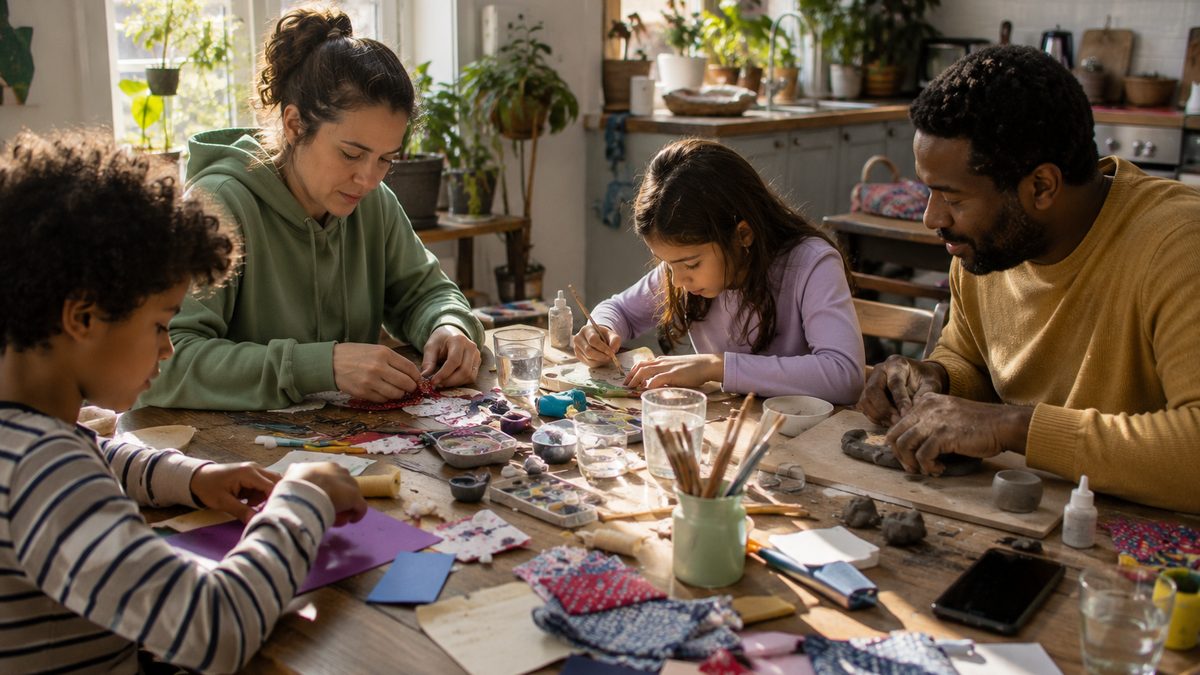
Hands-on crafts can give adults and families a practical break from screen-heavy routines. Editorial illustration by TheDailyGlobe.
Key Facts
- Crafting offers a practical screen break because it gives people a specific hands-on activity to do.
- Common craft activities include painting, scrapbooking, sewing, clay work, paper crafts and simple home projects.
- Michaels' 2026 creativity trend materials point to continued interest in hands-on creative routines, but the company should be read as a retail trend signal, not a neutral authority.
- Crafting can appeal to adults, families and beginners without being childish or expensive.
- The most useful craft routine is one people can actually repeat, not one that looks perfect online.
Most people know the feeling of wanting less screen time and then having no realistic plan for what comes next. The phone goes down, the room gets quiet, and within a few minutes the same screen is back in hand.
That is one reason crafting keeps finding a place in adult homes, family kitchens and weekend routines. It gives people something specific to do with their hands: paint a small canvas, fix a jacket seam, make a scrapbook page, shape clay, fold paper, decorate a shelf or start a simple home project.
The appeal is not that crafting is new. It is that it offers a more usable answer than simply telling people to log off. A hands-on hobby can fill the space that screens usually take, without needing to become a full identity, a side business or a perfect social media display.
Why Screens Are Hard to Replace
Screen time is sticky because it is easy. A phone supplies news, games, shopping, messages, videos, recipes, photos and background noise in one place. Telling someone to use it less does not solve the basic problem of what to do instead.
Crafting works differently because it gives the body a task. The hands are busy. The eyes have something in front of them. The mind has a small decision to make: which color, which stitch, which shape, which piece goes where.
That does not make crafting a cure for stress or a guaranteed wellness fix. It simply makes it more realistic than a vague promise to unplug. A person can sit at a table for 20 minutes and make progress on something physical.
The Return of Low-Pressure Making
Part of crafting's appeal is that it can be small. A person does not need a studio, a spare room or a professional setup to begin. A shoebox of supplies, a cleared kitchen table or a corner of the living room can be enough.
Painting, scrapbooking, sewing, clay work and paper crafts all offer a similar promise: make something with visible steps. The result does not have to be museum-worthy. The value may be in the time spent away from scrolling, the satisfaction of finishing a small project or the simple pleasure of using color, texture and tools.
This is where crafting differs from many hobbies that feel hard to start. It can be forgiving. A crooked stitch can still hold. A scrapbook page can still matter to the family. A painted flowerpot can still sit on the porch. A homemade card can still make someone smile.
Why Adults Are Taking It Seriously
Crafting is sometimes treated as childish, but that misses what many adults are looking for. A hands-on project can offer quiet, focus and control at a time when much of daily life is digital, rushed and unfinished.
There is also a practical side. Sewing can repair clothes. Scrapbooking can organize family memories. Clay, paint and paper projects can decorate a home without requiring a large budget. Simple home projects can make a room feel more personal.
For parents and grandparents, crafting can also create a shared activity that does not depend on everyone staring at separate devices. A family project may be messy, imperfect and short-lived, but it gives people a reason to sit around the same table.
A Trend Signal, Not a Sales Pitch
Michaels' 2026 creativity trend report and related company materials point to continued interest in hands-on creative routines. That is useful as a signal of what a major craft retailer sees in the market, but it should be read with the right caution. A retailer has a business interest in more people buying craft supplies.
The broader cultural point does not depend on one company. Craft and hobby participation data, consumer interest in home-based activities and the everyday desire for screen breaks all help explain why making things by hand remains appealing.
The healthiest version of the trend is not about buying more than a household needs. It is about finding a realistic activity that fits a person's time, budget and home.
How to Keep It From Becoming Another Performance
The irony of modern crafting is that it can easily get pulled back onto screens. A person starts looking for inspiration, then loses half an hour to videos, product lists and perfect finished projects. The craft becomes something to compare, not something to do.
That is why the most useful screen-break craft is usually simple. It has a clear beginning, does not require constant online instruction and can be picked up again later. A small sewing repair, a paint-by-number kit, a family photo page, a clay ornament or a stack of handmade cards can work because the task is understandable.
The goal does not need to be artistic excellence. It can be a quieter evening, a calmer Sunday afternoon, a break between work and dinner, or a family hour where everyone makes something instead of watching something.
The Habit Matters More Than the Project
Crafting sticks when it is treated as a habit, not a personality test. People are more likely to return to it when the supplies are easy to reach, the expectations are low and the project fits real life.
That can mean keeping a small basket of paper and markers for kids, a mending kit near the laundry, a sketchbook beside the couch or a weekend project box in a closet. The setup matters because friction is what usually sends people back to the phone.
Crafting will not replace every screen, and it does not need to. Its strength is smaller and more practical: it gives people an actual thing to do. In a culture full of digital noise, making something imperfect by hand can be enough to make a break feel possible.
Reporting note: Reporting draws on creativity trend materials, craft and hobby participation context, retail trend reporting used as a trend signal, and reviewed culture materials. This article was produced with AI-assisted research and reviewed by an editor before publication.