Community Composting Turns Food Scraps Into a Neighborhood Habit
Community composting gives food scraps a local second use, connecting households, gardens, schools, farms and small businesses without requiring every family to compost at home.
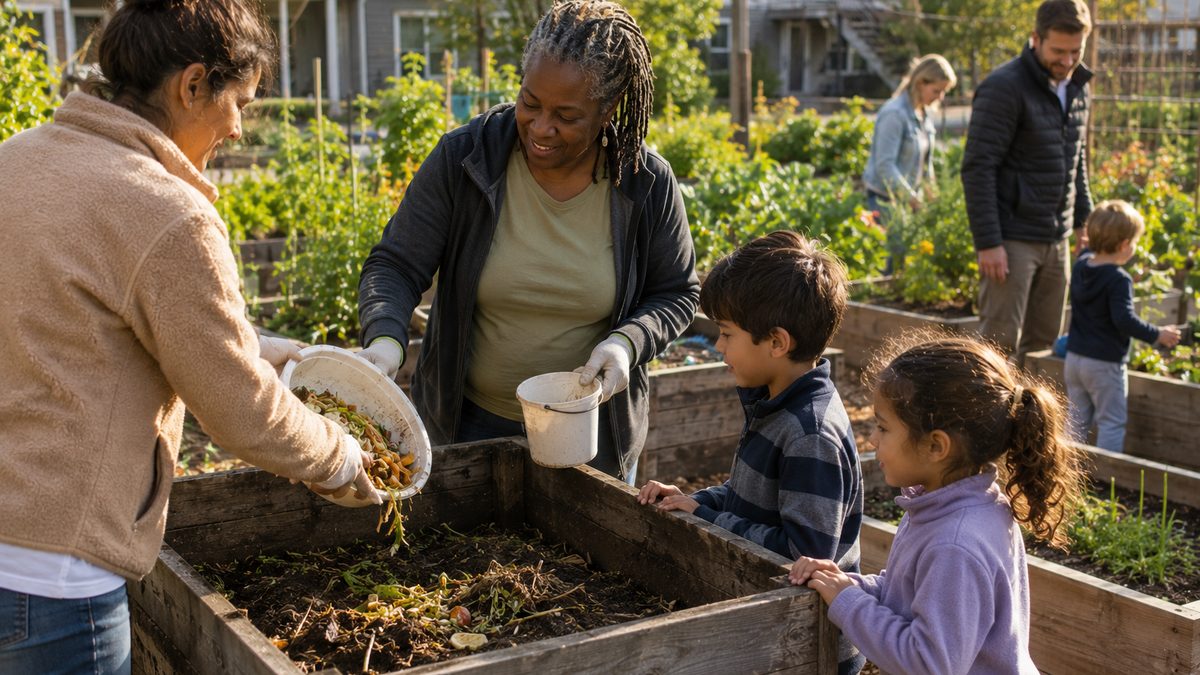
Community composting can turn food scraps into a shared neighborhood routine. Editorial illustration by TheDailyGlobe.
Key Facts
- Community composting collects food scraps and organic material at a local scale, often through neighborhood sites, gardens, schools, farms or small businesses.
- EPA materials describe composting as a way to turn organic material into a soil amendment.
- Community programs are different from large industrial composting systems because they are usually smaller and closer to the people using them.
- Food scraps matter because they are a regular part of household waste, even when residents do not have space or time to compost at home.
- Not every town has compost access, and local rules, accepted materials and program designs can vary.
Most kitchens produce scraps without much thought: coffee grounds, vegetable peels, eggshells, wilted greens, fruit cores. For many households, those scraps go straight into the trash because there is no easy place for them to go.
Community composting offers a different routine. Instead of asking every household to manage a backyard pile, a local drop-off site, garden, school, farm or small business can collect food scraps and turn them into compost closer to where people live.
The idea is practical rather than flashy. It gives residents a simple way to separate some food waste, helps create soil material for local use and can turn a private kitchen chore into a shared neighborhood habit. It is not available everywhere, and it is not a perfect answer for every household. But where it works, it can make food scraps feel less like garbage and more like part of a local cycle.
How Community Composting Works
Community composting usually begins with a simple step: people separate certain food scraps or organic materials from the rest of their trash. Those scraps may be collected at a drop-off site, picked up by a small service or gathered through a garden, school or neighborhood program.
From there, the material is managed so it can break down into compost. The details can vary. Some programs are run by community gardens. Others are tied to farms, schools, nonprofit groups, local businesses or municipal efforts. Some accept only fruit and vegetable scraps. Others may take a broader range of compostable material, depending on how the site is set up.
That local variation matters. Composting is not just tossing food into a pile and hoping for the best. A working program needs rules about what can be accepted, how the material is managed, how odors and pests are controlled, and where the finished compost goes.
Why Food Scraps Matter
Food scraps are ordinary, which is exactly why they matter. A single banana peel or handful of coffee grounds does not feel like much. But across homes, schools, restaurants and small businesses, scraps add up quickly.
EPA composting materials describe compost as a soil amendment made from organic material. That is the basic shift community composting tries to create: moving some organic waste out of the trash stream and toward a use that can support soil.
For readers, the appeal is less about becoming a compost expert and more about having a workable option. A household may not have a yard, may rent, may live in an apartment, may worry about pests or may simply not have the time to manage a compost system. A community site can lower that barrier.
Why Local Programs Feel Different
Industrial composting and community composting are not the same experience. A large facility may handle much bigger volumes and different materials. A community compost program is usually closer to the people using it, physically and socially.
That closeness can change how people think about waste. A family might bring scraps to a garden where the finished compost later helps grow vegetables. A school might use composting to teach students about soil and food systems. A small business might participate because a local collection route makes the routine manageable.
The neighborhood side is part of the story. Composting can connect people who might otherwise only pass each other on the sidewalk: gardeners, parents, renters, teachers, restaurant workers, volunteers and nearby farms. The food scraps are the starting point, but the habit can become a small piece of local culture.
What Makes a Program Practical
A useful compost program has to be clear. People need to know what is accepted, what is not, when and where to drop scraps, and how to keep the process clean at home. Confusing rules can turn a good idea into one more chore people abandon.
Programs also need realistic expectations. Not every neighborhood has the space, staffing, funding or volunteer base to run a compost site. Some towns may have local rules that shape what is possible. Some households may not be able to participate because of transportation, schedule, housing or health concerns.
That is why community composting works best when it is presented as an option, not a moral test. A resident who cannot compost is not failing. A town without a program is not automatically careless. Access depends on local infrastructure, planning and the people available to keep the routine going.
A Small Habit With Local Roots
The strongest case for community composting is that it makes an invisible part of daily life more visible. Food does not simply disappear after dinner. Scraps go somewhere. A local compost program gives some of those scraps a better destination when the program is well managed.
The climate and waste benefits should be described carefully, not oversold. Composting can be one useful practice among many, but it is not a magic fix for food waste, landfill pressure or soil health. It works best alongside other habits, including buying what a household can use, storing food well and wasting less in the first place.
For communities that do have access, the next step is often practical: learn the rules, start small and see whether the routine fits. A bucket under the sink, a weekly drop-off at a garden, a school collection bin or a neighborhood compost day can turn food scraps from an afterthought into a shared habit rooted close to home.
Reporting note: Reporting draws on Environmental Protection Agency composting guidance, EPA community composting materials, U.S. Composting Council resources, and reviewed environmental culture context. This article was produced with AI-assisted research and reviewed by an editor before publication.