Carlo Ginzburg Taught Readers to Find History in Small Lives
Carlo Ginzburg, the historian known for helping pioneer microhistory, showed how small clues could recover lives often left out of larger histories.
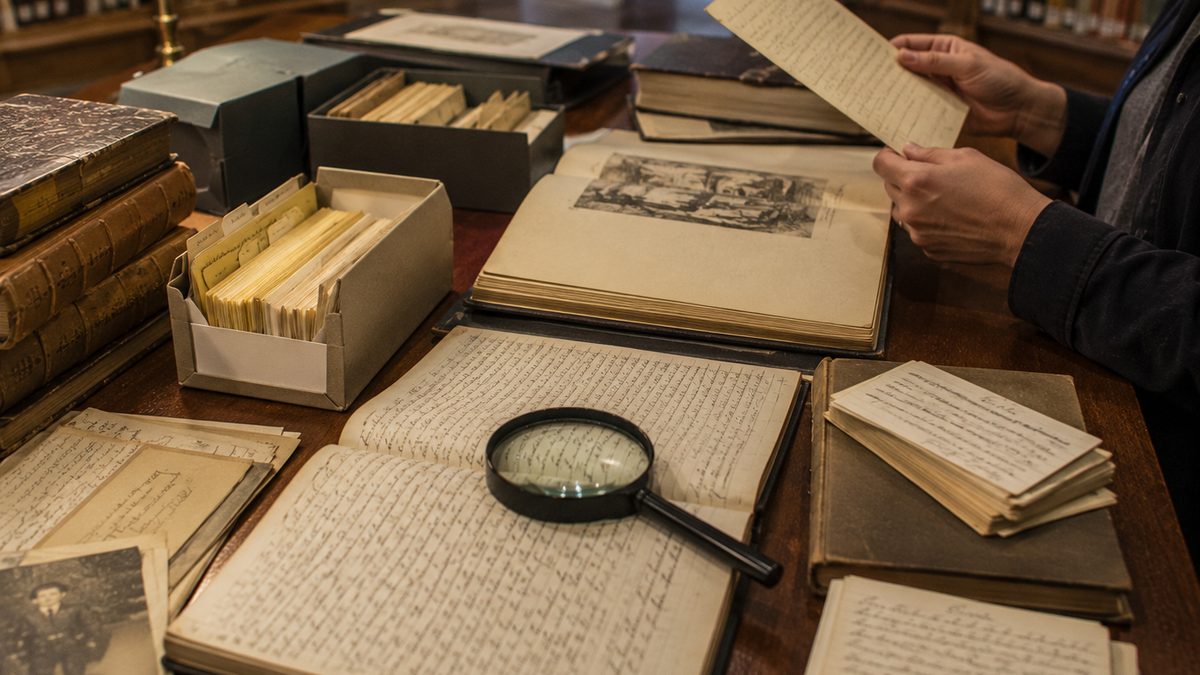
Carlo Ginzburg helped show how small historical details can recover lives that larger histories often miss. Editorial illustration by TheDailyGlobe.
Key Facts
- Carlo Ginzburg died at 87 in Bologna, Italy.
- The Associated Press described him as a pioneer of microhistory.
- His best-known works include The Cheese and the Worms.
- His scholarship focused attention on marginalized people and small historical details.
- It remains unclear which of his books will remain most influential for general readers over time.
History can sometimes turn on a tiny clue: a phrase in a record, a strange belief repeated under questioning, a detail that looks minor until someone patient enough stops to ask what it reveals.
Carlo Ginzburg built a major scholarly career around that kind of attention. Ginzburg, who died at 87 in Bologna, Italy, was described by the Associated Press as a pioneer of microhistory, a way of studying the past by looking closely at small lives, narrow cases and overlooked traces in the archive.
For general readers, his work mattered because it made history feel less like a procession of kings, wars, laws and institutions, and more like a search for people who might otherwise be lost. His best-known works include The Cheese and the Worms, a book that helped bring his method to a wider audience.
What Microhistory Means
Microhistory is easier to understand than the name may suggest. Instead of starting with a sweeping national story or a powerful institution, it often begins with a small case: one person, one village, one trial, one set of records, one strange detail that opens a door into a larger world.
That does not make the work small in importance. The point is that a narrow case can reveal how power, belief, fear, class, religion, language or law worked in everyday life. A person who barely appears in the historical record can still help readers understand the society around them.
Ginzburg became closely associated with that approach. His work showed that the past is not only preserved in official speeches, major battles or the decisions of rulers. It can also be found in fragments, mistakes, testimony and the uneven records left behind by ordinary people who crossed paths with authority.
Why The Cheese and the Worms Mattered
The Cheese and the Worms became Ginzburg’s most widely recognized book because it gave readers a memorable way into his larger method. Rather than building a history around a famous leader, he centered attention on a much less powerful figure and used the surviving record to explore belief, reading, culture and authority.
That kind of book changed what many readers expected history to do. It showed that a person outside the usual halls of power could still be worth serious attention. It also showed that unusual ideas, local language and small details were not distractions from history. They were part of history.
For readers who are not scholars, that may be the most lasting part of Ginzburg’s public meaning. He made the archive feel alive. He invited people to see old records not as dead paperwork but as traces of human lives shaped by pressure, imagination and the limits of their time.
Recovering People Larger Histories Miss
Large histories are necessary. They help explain wars, governments, economies, laws and movements. But they can also flatten the past. The people with the most power tend to leave the most records. The people with the least power often appear only when something has gone wrong: in court files, church records, investigations, property disputes or official complaints.
Ginzburg’s work paid attention to those uneven traces. His scholarship focused on marginalized people and small historical details, using them to ask bigger questions about culture and power. That approach helped challenge the idea that history belongs mainly to institutions and elites.
It also required humility. A small record cannot tell everything. A historian has to work carefully, avoiding the temptation to turn a fragment into more certainty than it can support. Ginzburg’s importance was not only that he looked at small details, but that he treated evidence as something demanding patience and care.
Evidence, Power and the Reader’s Imagination
Part of Ginzburg’s appeal is that his method resembles detective work, but without the cheap certainty of a mystery solved too neatly. A clue matters, but it has to be tested. A record speaks, but not always clearly. A silence in the archive may be as important as what survives.
That makes his work relevant beyond academic history. Readers live in an age filled with claims, fragments, screenshots, documents, posts and competing stories about what is true. Ginzburg’s work reminds people that evidence does not interpret itself. Someone has to ask where it came from, who produced it, who had power, who was missing and what cannot honestly be known.
That lesson is useful for history, but it is also useful for modern life. Small details can reveal a great deal. They can also mislead when stripped of context. The careful reader has to do more than notice a clue. The reader has to understand what kind of clue it is.
What Remains Unclear
It remains unclear how widely Ginzburg’s work is read outside academic settings today. Some readers may know his name through courses, publishers, historians or references to microhistory. Others may know the ideas without knowing the person who helped shape them.
It is also unclear which of his books will remain most influential for general readers over time. The Cheese and the Worms is his best-known work, but a scholar’s influence often spreads through students, methods, arguments and habits of reading, not only through one title.
What is clear is that Ginzburg helped widen the sense of who deserves historical attention. His work treated forgotten lives as worthy of serious study and showed that the small scale can carry large meaning.
Why His Method Still Matters
Carlo Ginzburg’s legacy is not only a set of books. It is a way of looking. He taught readers to pause over small things, to respect evidence, to notice power and to ask what larger histories leave out.
That kind of attention still matters because the past is always at risk of becoming too simple. Nations become symbols. Institutions become abstractions. Ordinary people disappear behind labels. Ginzburg’s work pushed in the other direction, toward texture, detail and human life.
In a noisy information age, that may be the plainest reason his work continues to matter. He showed that careful attention can recover meaning from fragments, and that even a small life, read closely, can change how history is understood.
Reporting note: Reporting draws on Associated Press reporting, UCLA biographical materials, University of Chicago Press author materials, and reviewed background context. This article was produced with AI-assisted research and reviewed by an editor before publication.