Activity Fairs Are Making It Easier for Adults to Find a Group
For adults who want more community but do not know where to start, activity fairs can offer a low-pressure way to find clubs, hobbies and local groups.
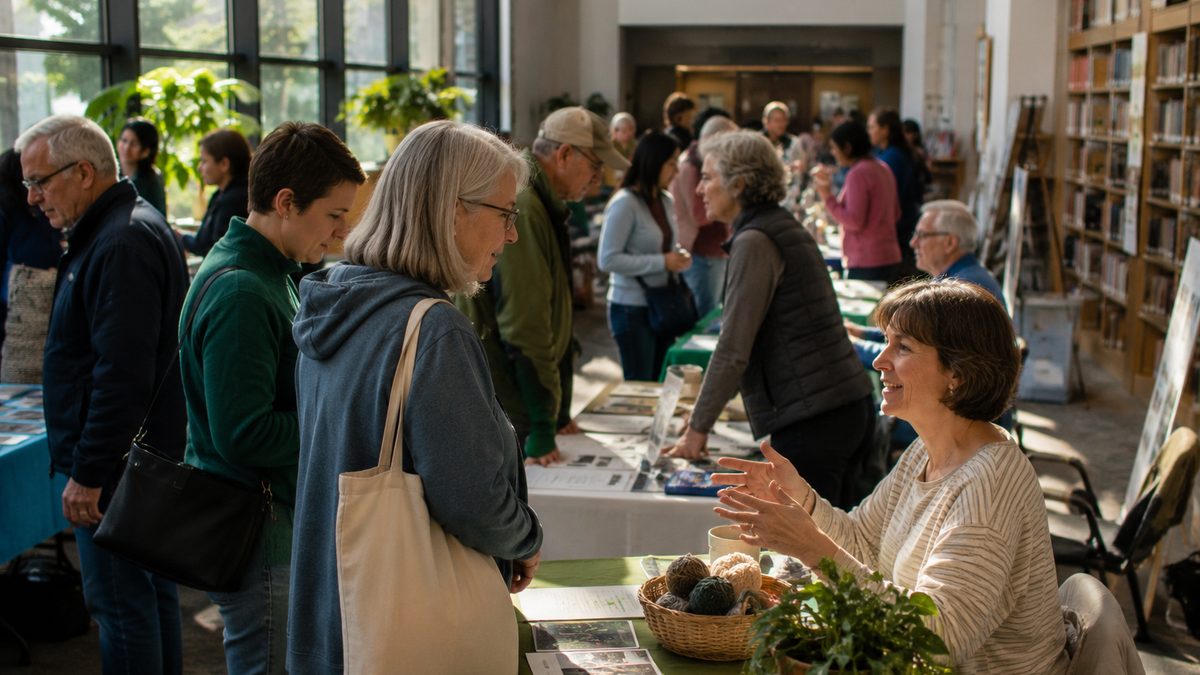
Activity fairs can give adults a low-pressure way to find clubs, hobbies and local groups. Editorial illustration by TheDailyGlobe.
Key Facts
- Activity fairs bring clubs, hobby groups and local organizations together so adults can explore options in one place.
- Recent reporting has described activity fairs as a practical model for adult connection.
- CDC materials identify community connection as part of broader well-being.
- Social club coverage points to real demand for low-pressure ways to meet people.
- The model is useful, but available reporting does not show that activity fairs are widespread in every community.
Making friends as an adult can feel strangely difficult. People may want more community, but the first step is often the hardest part: where do you go, what do you join, and how do you show up without feeling awkward?
Activity fairs offer one practical answer. Instead of asking adults to search online, message strangers or commit to a group before they understand it, these fairs put clubs, hobbies and local organizations in one place. A person can walk around, ask a few questions and leave with one or two realistic options.
The idea is simple, but the need behind it is real. CDC materials have pointed to community connection as part of public health and well-being, and recent reporting on adult friendship and social clubs has shown how many people are looking for low-pressure ways to belong. Activity fairs do not solve loneliness by themselves, but they can make the search for a group less intimidating.
Why the First Step Is So Hard
Children and teenagers are often surrounded by built-in social structures: school, teams, classes, clubs and neighborhood routines. Adults can lose those structures quickly. A job change, a move, parenting demands, caregiving, divorce, retirement or remote work can shrink a social circle without much warning.
Even when adults want to meet people, the options can feel oddly high-pressure. Joining a club might sound like a commitment before anyone knows whether the group is a good fit. Showing up alone can feel uncomfortable. Searching online can be overwhelming, and not every local group is easy to find.
That is where activity fairs have value. They lower the risk of trying. A person does not have to pick one group in advance. They can browse a table, ask when a walking club meets, learn what a book group reads or find out whether a gardening group welcomes beginners.
A Practical On-Ramp to Belonging
The strongest activity fairs work less like networking events and more like community maps. They show people what already exists nearby: game nights, volunteer groups, craft circles, sports leagues, walking clubs, neighborhood associations, language tables, repair groups, choirs, library programs and outdoor meetups.
That matters because belonging often starts with shared activity, not a perfect conversation. It is easier to talk while planting seedlings, learning a board game, organizing a food drive or walking a trail than it is to simply announce that you are looking for friends.
For adults who feel rusty socially, that structure can be a relief. The activity gives people something to do, and the group gives them a reason to come back.
Why This Fits the Moment
Interest in adult social clubs and low-pressure community spaces reflects a larger frustration: many people are connected constantly online but still feel short on reliable, in-person contact. A group chat is not the same as a standing Wednesday night activity. A social feed is not the same as knowing people by name.
Activity fairs are not new in spirit. Schools, colleges, churches, libraries and civic groups have used versions of them for years. What feels useful now is applying the model to adult life more broadly, especially for people who are not already tied into a workplace, campus or congregation.
The model is also flexible. A library could host one. So could a parks department, community center, senior center, neighborhood group, local nonprofit or small-town festival. The format does not require every group to be large or formal. A small local club may be exactly what someone is looking for.
What Makes a Fair Actually Helpful
A useful activity fair needs more than tables and flyers. It should make the next step clear. Adults need to know when the group meets, whether beginners are welcome, what the cost is, whether children can come, how often members gather and who to contact afterward.
Low-pressure also means honest. Not every group fits every person. Some clubs are social. Some are skill-based. Some are faith-connected. Some are civic. Some are quiet. Some require dues, equipment or regular attendance. Clear information helps people choose without embarrassment.
The best fairs also avoid making loneliness feel like a personal failure. Many adults are not isolated because they lack character or effort. Often, modern life simply does not create enough easy places to belong.
Do Not Overstate the Trend
Activity fairs should be described carefully. Available reporting points to a useful model and real demand for adult connection, but it does not prove that these fairs are common everywhere or that they will work the same way in every town.
Access also varies. A large city may have many clubs but make them hard to navigate. A small town may have fewer options but stronger existing networks. Rural areas, suburbs and urban neighborhoods all face different transportation, space and scheduling challenges.
That uncertainty does not weaken the idea. It keeps it grounded. Activity fairs are not a national cure for loneliness. They are a practical tool some communities can use to make joining easier.
The Small Power of Showing Up
For adults, the hardest part of finding community is often not wanting it. It is walking through the door. Activity fairs make that door easier to find.
The next step can be modest: take a flyer, ask one question, attend one meeting, try one Saturday event. Nobody has to become a club officer or reinvent their social life in a week.
That is why the model is worth watching. In a time when many adults are looking for connection without pressure, activity fairs offer something refreshingly concrete: a room full of possible first steps.
Reporting note: Reporting draws on recent reporting about activity fairs, CDC community connection materials, social club coverage, and reviewed culture and society context. This article was produced with AI-assisted research and reviewed by an editor before publication.