What a July Fourth Cookout Says About Food Prices
A classic holiday cookout is costing more this year, showing how grocery prices still press on family budgets even for simple gatherings.
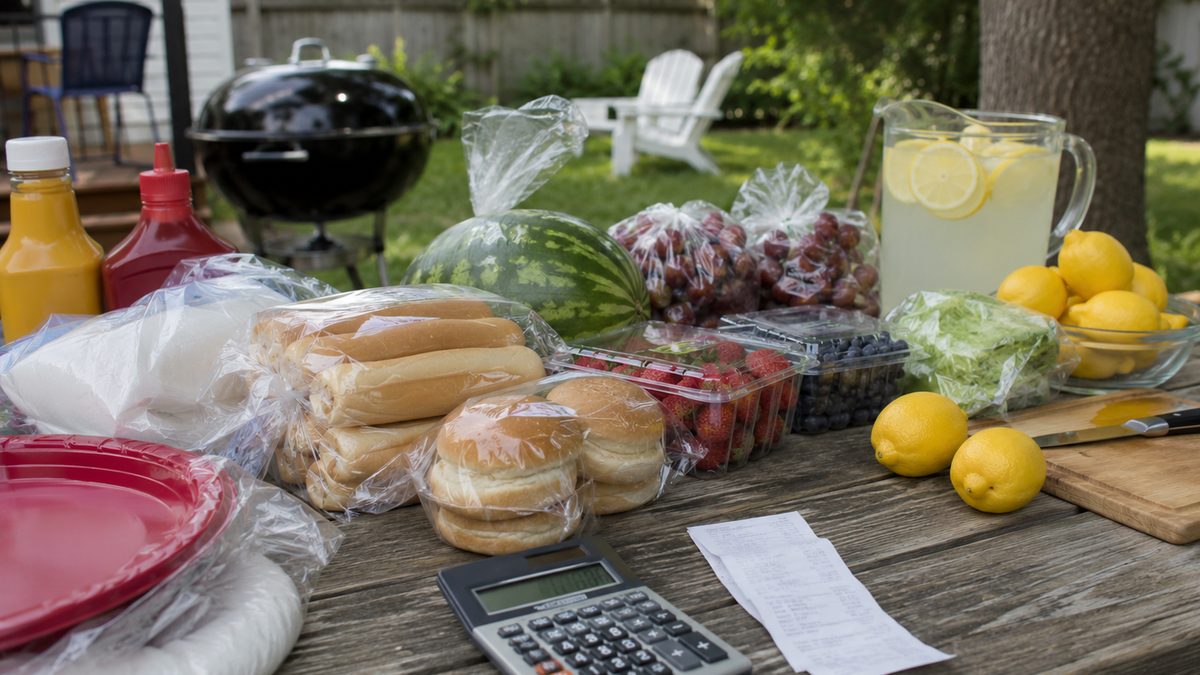
A Fourth of July cookout remains a familiar way for families to feel food-price pressure. Editorial illustration by TheDailyGlobe.
Key Facts
- The American Farm Bureau Federation reported that a classic 2026 Independence Day cookout for 10 costs $73.82.
- Farm Bureau said that is up $2.90, or 4 percent, from last year.
- The survey basket includes cheeseburgers, chicken breasts, pork chops, chips, beans, strawberries, lemonade, cookies and ice cream.
- The Bureau of Labor Statistics tracks food prices as part of the Consumer Price Index.
- The survey average does not mean every family or every region will pay the same amount.
A family getting ready for July Fourth may not think of itself as tracking inflation. It is just pricing burgers, chicken, sides, drinks and dessert before people come over. Then the receipt starts to tell the story.
The holiday cookout is a simple meal, which is exactly why it is useful. It turns national food-price pressure into something families can see on the table: meat, buns, chips, beans, fruit, lemonade, cookies and ice cream. When those basics cost more, the pressure is easy to feel.
A Holiday Meal Becomes a Price Check
The American Farm Bureau Federation's 2026 cookout survey puts the cost of a classic Independence Day cookout for 10 at $73.82. Farm Bureau said that is $2.90 higher than last year, a 4 percent increase.
That number should be read as a survey benchmark, not a receipt for every household. Families buy different brands, shop at different stores, serve different portions and live in regions with different prices. Some people may spend less. Others may spend much more, especially if they add extra meat, prepared foods, drinks or guests.
Still, the survey is useful because it measures a familiar basket of foods. The listed items include cookout staples such as cheeseburgers, chicken breasts, pork chops, chips, beans, strawberries, lemonade, cookies and ice cream. Those are not luxury items for most families. They are the kind of foods many people associate with an ordinary summer gathering.
Why the Cookout Number Feels Personal
Inflation can sound abstract when it is discussed as a monthly percentage. A cookout does not feel abstract. It is the family deciding whether to buy beef or chicken, how many sides to make, whether dessert is homemade or store-bought, and whether hosting still fits the budget.
Food prices affect families differently because household size, income, location and traditions differ. A family hosting 20 people may feel a small price increase more sharply than a couple bringing one side dish. A household that already stretched its grocery budget during the week may notice the holiday bill even more.
That is why the cookout story matters beyond July Fourth. Food is one of the most visible ways people judge whether the economy feels manageable. A person may not follow every inflation report, but they know when a cart of groceries costs more than expected.
Meat and Produce Can Move the Total
The cookout basket includes several items that can swing a grocery bill quickly. Meat is often one of the most expensive parts of a summer gathering, especially when shoppers are buying enough for a group. Beef, chicken and pork prices can affect whether families choose burgers, grilled chicken, pork chops or a smaller spread.
Produce also matters. Strawberries and other seasonal foods can vary by region, weather, supply and store pricing. A family that adds fruit, salad ingredients or other fresh sides may see a different bill than the survey average.
The available sources do not show how each region compares or how much families are changing their menus because of cost. They also do not establish whether beef and produce pressure will ease later this summer. Those are the kinds of details readers should watch in future food-price updates.
Grocers and Local Food Businesses Feel It Too
Higher food costs are not only a household issue. They also affect grocers, local meat shops, restaurants, caterers, farms and small food businesses that rely on predictable demand and manageable input costs.
A local grocer may see families trade down, buy smaller packages or skip extras. A restaurant or caterer may face the same ingredient pressure while also dealing with labor, rent, utilities and other operating costs. Farmers and suppliers can also face their own cost pressures before food reaches the store.
That does not mean every business faces the same squeeze or sets prices the same way. It does mean the family cookout sits inside a larger food economy. By the time a shopper picks up a package of meat or a carton of ice cream, several parts of that chain have already shaped the price.
What the CPI Adds to the Picture
The Bureau of Labor Statistics Consumer Price Index gives broader official context for food prices. The Farm Bureau survey shows one seasonal basket. CPI data tracks consumer prices more broadly, including food categories over time.
Those two kinds of information should not be treated as the same thing. A cookout survey helps explain what a particular holiday meal may cost. CPI data helps show how consumer prices are moving across the economy. Together, they help readers connect a family receipt to a larger price picture without claiming every household is having the same experience.
That distinction matters because food inflation is not felt evenly. One family may cut back on meat. Another may keep the same menu but spend more. Another may ask guests to bring sides. The headline number helps explain pressure, but it does not describe every kitchen table.
What to Watch After the Holiday
The next signals to watch are CPI food data, USDA food-price updates and summer trends in beef and produce. If key ingredients keep rising, families may keep adjusting cookout menus, grocery trips and restaurant spending. If some prices ease, the pressure may feel less sharp later in the season.
For now, the July Fourth cookout offers a clear snapshot of how food prices still reach into ordinary family plans. The cost of a holiday meal does not explain the whole economy. But it does explain why many families still feel inflation at the grocery store, one receipt at a time.
Reporting note: Reporting draws on American Farm Bureau Federation cookout survey materials, Bureau of Labor Statistics consumer price data, food-price reporting, and reviewed background materials. This article was produced with AI-assisted research and reviewed by an editor before publication.