Stamp Prices Are Going Up Again, and Small Mail Costs Still Add Up
USPS price changes will raise the cost of a Forever stamp, a small increase that can still matter for households and small businesses that rely on mail.
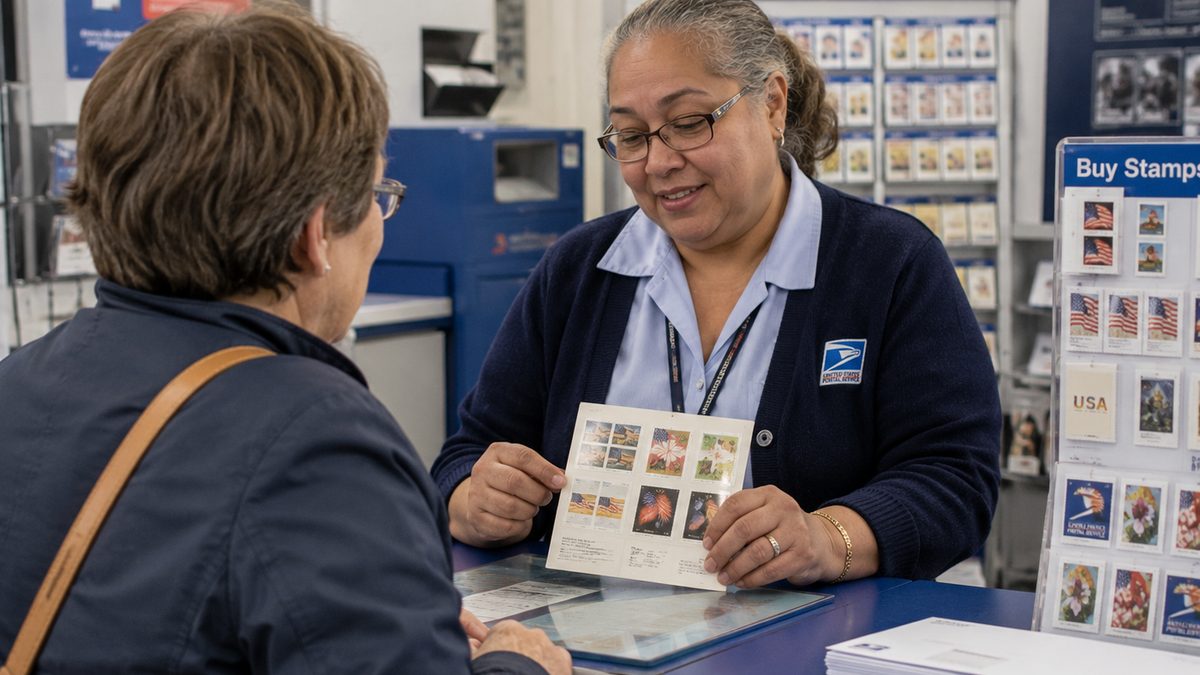
Postage increases are small on their own, but mailing costs can still add up for households and small businesses. Editorial illustration by TheDailyGlobe.
Key Facts
- USPS filed notice of mailing services price changes scheduled to take effect July 12, 2026.
- USPS said the First-Class Mail Forever stamp price would increase from 78 cents to 82 cents.
- Postal Explorer listed final July 2026 price files updated June 17, 2026.
- The available information does not show how much the changes will affect households compared with heavier mail users.
- Future USPS price and service changes remain worth watching for households, nonprofits and small businesses that still rely on mail.
A stamp is not the biggest bill in most households. But it is one of those small costs people notice when they are mailing a birthday card, sending a form, paying a bill, returning paperwork or helping a family member handle something that still has to go through the mail.
The same is true for small businesses. A contractor mailing invoices, a nonprofit sending notices, a church mailing updates, a home seller shipping paperwork or a local office sending customer forms may not be crushed by one price change. But small recurring costs still count, especially when many other services have also become more expensive.
The U.S. Postal Service filed notice of mailing services price changes set to take effect July 12, 2026. USPS said the price of a First-Class Mail Forever stamp would rise from 78 cents to 82 cents. Postal Explorer listed final July 2026 price files updated June 17.
Why a Four-Cent Increase Still Gets Noticed
A four-cent increase is not catastrophic. For a person who mails only a few cards a year, the change may barely register. That is important to say plainly. Not every price increase deserves panic, and this one should not be treated as a major burden for every household.
But small costs are still part of the real budget picture. Families do not pay only one small increase. They pay many of them across utilities, insurance, groceries, fuel, school fees, banking, subscriptions, repairs and services. Postage fits into that larger pattern: one more ordinary cost that is easy to overlook until it shows up again.
Mail also remains more important than it may seem in a digital-first world. Many people still use it for medical paperwork, legal documents, school forms, checks, greeting cards, invitations, tax-related mail, government notices and records that need to be sent physically.
Where Households Still Use Mail
For households, the cost of a stamp often appears around moments that already require attention. A parent may be mailing a school form. An adult child may be helping an older relative send paperwork. A family may be sending invitations, thank-you notes, medical documents or forms connected to benefits, insurance or legal matters.
Those uses are not constant for everyone, but they have not disappeared. Many services have moved online, yet not every person is comfortable with digital forms, not every agency or business handles every task electronically, and not every document is simple to upload or submit through a portal.
That makes the stamp price a small but recognizable reminder of a larger truth: some basic services still carry physical costs. Envelopes, printing, postage and time all add up when a family has repeated paperwork needs.
Why Small Businesses Pay Attention
The effect can be more visible for small businesses and local organizations that send mail more often. A home business, contractor, local office, nonprofit, church, community group or small seller may use mail for invoices, customer notices, forms, donor letters, statements or shipping-related communication.
For those users, the issue is less about one stamp and more about volume. A few cents multiplied across repeated mailings becomes a real line item. It may not be the largest cost a business faces, but it is another operating expense in a year when many small employers are already watching supplies, rent, wages, insurance and transportation.
The practical effect will vary. A business that rarely mails anything may barely notice. A nonprofit that sends regular notices or a small office that still uses paper billing may feel the increase more clearly. The available information does not show how each type of customer will adjust.
The Service-Cost Squeeze
The stamp increase is best understood as part of the service-cost squeeze, not as a standalone crisis. Families and small businesses are often not dealing with one dramatic price jump. They are dealing with repeated small increases across services they still need.
That is why a postage change can draw attention even when the dollar amount is modest. It touches a public service nearly everyone recognizes. It also lands in a part of life where people may already feel boxed in by paperwork, deadlines and administrative tasks.
USPS has described its pricing decisions in the context of its own financial and operational pressures. Those claims should be kept in that frame: the Postal Service is explaining why it is pursuing changes, while customers experience the result as another small cost attached to everyday mail.
What Remains Unclear
Several questions remain open. It is not yet clear how much the July changes will affect occasional household mailers compared with heavier users. It is also unclear how small businesses, nonprofits and local groups will adjust if they rely on regular mailings.
Future pricing is another question. The July 2026 price files show the current change, but they do not settle what happens later. Households and businesses that depend on mail will have reason to watch future USPS pricing and service announcements.
For readers, the useful takeaway is simple: the cost of a stamp is going up, and the increase is small. But small does not mean meaningless. For families and Main Street organizations still using mail for real tasks, postage remains one more everyday service cost that adds up over time.
Reporting note: Reporting draws on U.S. Postal Service announcements, Postal Explorer price-change materials, and reviewed background materials. This article was produced with AI-assisted research and reviewed by an editor before publication.