Small Business Owners Are Still Watching Inflation, Hiring and Customer Demand
New business applications rose in April, but projected formations slipped and recent survey coverage points to continued caution around costs, hiring and customer demand.
Save Article

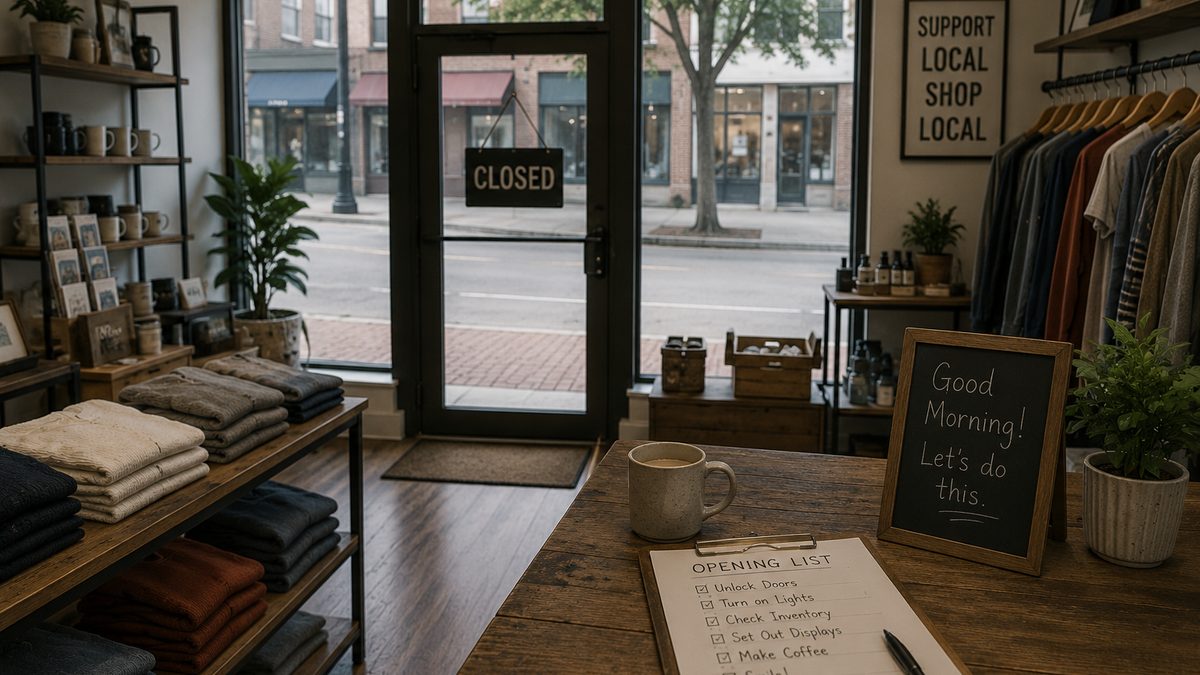
Small businesses are still balancing cost pressure, hiring decisions and customer demand as the year moves forward. Editorial illustration by TheDailyGlobe.
Key Facts
- The Census Bureau reported 503,171 seasonally adjusted business applications for April 2026, up 2.1 percent from March.
- The Census Bureau reported projected business formations within four quarters of 28,479 for April 2026, down 1.6 percent from March.
- Projected business formations are estimates, not a count of actual new businesses opened in April.
- Recent small-business survey coverage points to inflation, hiring plans and customer demand as continuing concerns.
- Survey findings should be read as signals from participating businesses, not as hard proof of conditions across every small firm.
A small business owner does not need a national economic forecast to feel the pressure. The daily choices are closer than that: whether to hire one more worker, raise a price, hold off on new equipment, shorten hours, or wait to see whether customers keep spending.
Recent data and survey coverage show a Main Street economy that is still active, but careful. New business applications rose in April, according to the U.S. Census Bureau, while projected business formations within four quarters fell. At the same time, recent small-business coverage continues to point to inflation, hiring plans and customer demand as concerns for owners.
That mix matters because small businesses sit close to everyday life. They are local employers, service providers, stores, contractors, restaurants and shops. When owners feel squeezed, customers can notice it in prices, staffing, hours, wait times and the choices available in a community.
Applications Rose, but the Signal Is Mixed
The April business formation data offers two different signals at once. On one hand, applications rose from March, which shows people are still filing paperwork to start businesses. That matters because business starts are one way communities renew themselves: new shops, services, side businesses, contractors and local employers often begin with an application.
But applications are not the same thing as open storefronts or new payroll jobs. Some applications never become operating businesses. Some businesses start small and stay small. Some never hire employees.
That is why the projected formation number adds caution. The Census Bureau reported projected business formations within four quarters of 28,479 in April, down 1.6 percent from March. That estimate looks ahead at how many applications may turn into employer businesses, rather than simply counting how many forms were filed.
Costs Still Shape Main Street Decisions
For small firms, inflation is not just a headline number. It can show up as rent, utilities, insurance, supplies, wages, delivery costs, inventory and credit-card fees. A restaurant may see it in food costs. A retailer may see it in wholesale prices. A service business may see it in fuel, parts, software or payroll.
Recent U.S. Chamber of Commerce coverage said small businesses have been cutting back hiring plans as inflation concerns grow. That kind of survey coverage should be attributed carefully, but it fits the practical tension many owners face: they may still have customers, but they are cautious about adding fixed costs if margins feel tight.
For customers, that pressure can appear in small ways. A favorite shop may raise prices. A contractor may book farther out. A cafe may run with fewer workers. A store may carry less inventory. None of those choices proves a business is failing, but they can show how owners manage risk when costs stay uncomfortable.
Hiring Depends on Confidence, Not Just Need
A business can need help and still hesitate to hire. Bringing on another worker means wages, training time, scheduling, payroll taxes and the responsibility of keeping that position useful if demand softens.
That is why hiring plans are a useful window into small-business confidence. Owners may want to grow, but they often wait until they believe customer demand will hold up. If sales are uneven, hiring can become the decision that gets delayed.
NFIB small-business trend materials and recent retail trade reporting have pointed to concerns around small-business optimism and independent retail conditions. Those signals do not speak for every owner in every industry, but they add context to a Main Street economy where activity and caution can exist at the same time.
Why Customers Are Part of the Story
Small businesses watch customers closely because demand can change faster than a lease, loan payment or payroll schedule. If households pull back, delay purchases, trade down or shop around more aggressively, local firms feel it.
That does not mean shoppers are doing anything wrong. Families have their own budgets, bills and tradeoffs. But the connection is direct: household pressure can become business pressure, and business pressure can come back to households through prices, service levels and local job openings.
This is the difference between Main Street activity and Main Street confidence. The Census data shows applications are still being filed. The survey coverage shows owners are still watching costs and demand closely. Both can be true.
What Remains Unclear
It remains unclear whether more April business applications will turn into payroll employers later in 2026. The projected formation number gives one estimate, but it is not the same as watching actual new firms open, hire and stay in business.
It is also unclear whether inflation concerns will slow hiring broadly across small businesses or mainly in certain sectors. Retailers, restaurants, contractors, service firms and professional businesses can face different cost structures and customer patterns.
What to Watch Next
The next useful signals will come from future Census business formation releases and small-business survey updates. Together, they can show whether applications keep rising, whether projected employer formations improve, and whether owners become more comfortable hiring.
For readers, the clearest takeaway is practical: small businesses are still moving, but many are not operating as if conditions are easy. Costs, hiring and customer demand remain the three pressure points to watch in local economies as the year moves forward.
Reporting note: Reporting draws on U.S. Census Bureau business formation data, small-business survey coverage, trade reporting, and reviewed background materials. This article was produced with AI-assisted research and reviewed by an editor before publication.