Low Layoffs Mask a Slower Hiring Market for Workers
Jobless claims remain low, but slower hiring can still make the labor market feel difficult for workers trying to move, negotiate or find a new role.
Save Article
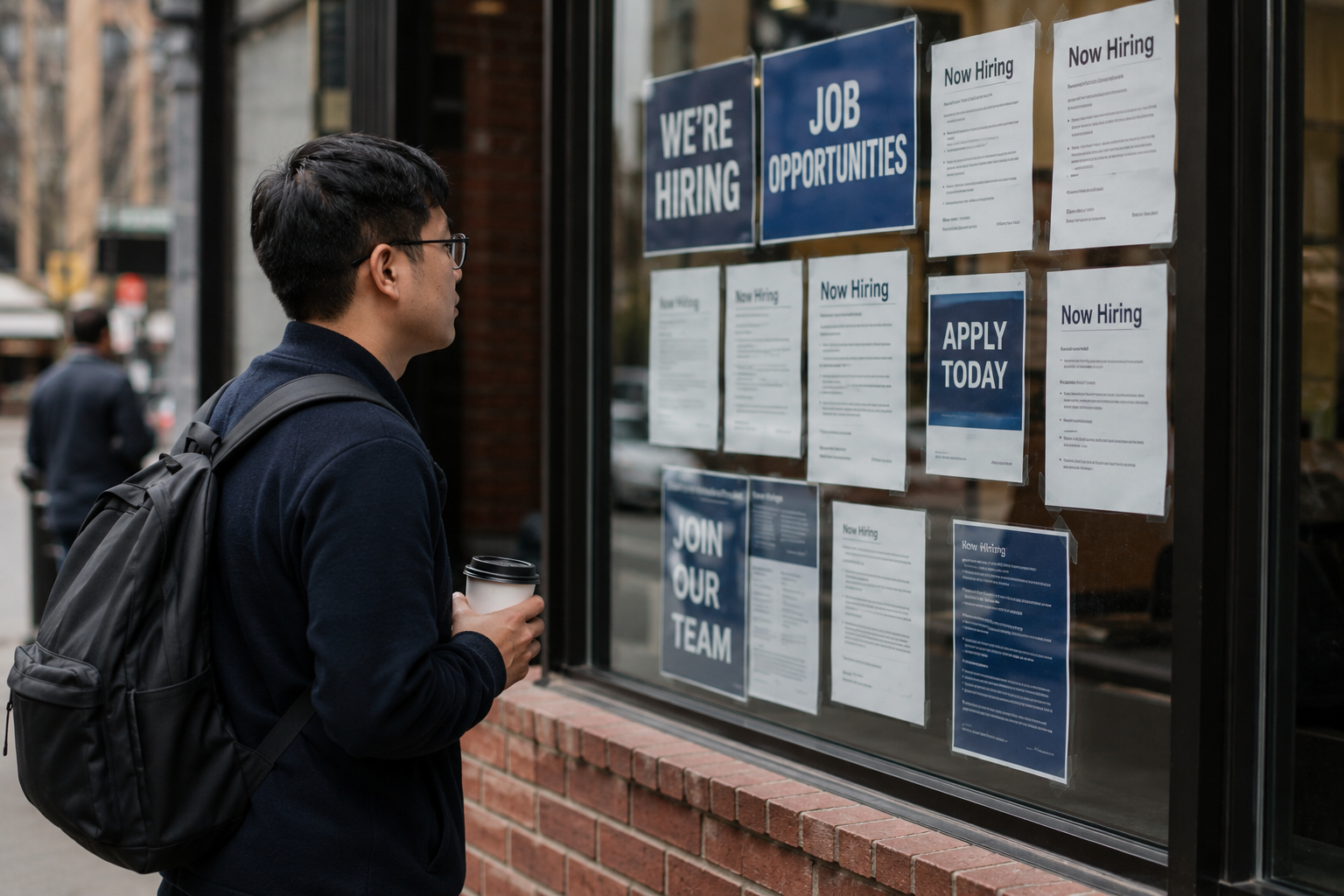
A labor market with low layoffs can still feel difficult when hiring slows and workers have fewer clear paths forward. Editorial illustration by TheDailyGlobe.
Key Facts
- Initial jobless claims fell to 209,000 for the week ending May 16, 2026, according to the Department of Labor.
- BLS reported April nonfarm payroll employment rose by 115,000.
- The unemployment rate stayed at 4.3% in April.
- Chicago Fed analysis describes the labor market as a low-hire, low-fire environment.
- AP reported claims remained low despite broader economic uncertainty.
A labor market can look steady from the outside and still feel difficult to the people living inside it.
That is the tension facing many workers now. Layoffs remain relatively low, which is good news for people who already have jobs. But slower hiring can make it harder for job seekers to find openings, for workers to switch roles and for households to feel confident about income growth.
The result is not a collapsing labor market. It is a more cautious one, where employers may be holding onto workers while also becoming more selective about adding new ones.
What the Latest Data Shows
The Department of Labor reported that initial jobless claims fell to 209,000 for the week ending May 16. Claims measure people filing for unemployment benefits, so low claims are a sign that employers are not broadly rushing to cut staff.
The broader jobs picture is more mixed. The Bureau of Labor Statistics reported that nonfarm payroll employment rose by 115,000 in April, while the unemployment rate remained at 4.3%. That points to continued job growth, but not the kind of rapid hiring that gives workers a wide-open market.
The Chicago Fed has described the current pattern as low-hire, low-fire. In plain English, that means employers are not laying off large numbers of workers, but they are also not hiring aggressively.
Why Low Layoffs Can Still Feel Tight
Low layoffs help explain why the labor market has not felt like a downturn. People who have jobs are generally less likely to lose them when claims stay low, and that gives households some stability.
But job security is only one side of the worker experience. The other side is mobility. A healthy labor market usually gives workers options: a better job, a raise, a shorter commute, a different schedule or a role that fits their skills more closely.
When hiring slows, those options narrow. Job seekers may send more applications before getting interviews. Workers who want to leave a job may decide to stay put. People trying to negotiate pay may have less leverage if employers know fewer companies are competing for the same workers.
What This Means for Wages and Households
A slower hiring market can affect wages even without a sharp rise in layoffs. If employers are cautious about expanding payrolls, they may also be cautious about raises, bonuses or new offers.
That matters for household budgets because many families are still trying to keep up with higher prices. A worker does not need to lose a job to feel pressure. Slower wage growth, fewer opportunities and uncertainty about the next move can all change how people spend and save.
For employers, the same caution can reflect uncertainty about costs, demand, interest rates and the broader economy. Holding onto trained workers while delaying new hiring can be a way to stay flexible.
What Claims Do Not Capture
Jobless claims are useful, but they do not tell the whole story. They do not show how long job searches are taking, whether applicants are finding roles that match their skills, or whether workers are settling for jobs with lower pay or fewer hours than they want.
Claims also do not fully capture people who leave the labor force, freelancers whose work dries up, or workers who remain employed but feel stuck. That is why claims data should be read alongside payroll growth, job openings, quits, wage data and unemployment.
The current picture is best understood as stable but less forgiving. Layoffs are not flashing a broad warning sign, but slower hiring can still make the labor market harder for people trying to move forward.
What to Watch Next
The next signals to watch are upcoming jobs reports, job openings data, weekly claims and wage growth. Together, those will show whether the labor market is simply cooling or becoming more difficult for workers over time.
One open question is whether businesses keep hiring slowly if costs remain elevated. Another is whether wage gains strengthen later this year or continue to cool.
For now, the clearest takeaway is practical: low layoffs are good, but they do not guarantee an easy job market. For many workers, the challenge is not just keeping a job. It is finding the next good one.
Reporting note: Reporting draws on Department of Labor unemployment insurance data, Bureau of Labor Statistics employment data, Federal Reserve Bank of Chicago labor-market analysis, wire reporting, and reviewed background materials. This article was produced with AI-assisted research and reviewed by an editor before publication.