Dollar General’s $1 Push Shows How Hard Shoppers Are Hunting for Value
Dollar General is emphasizing more low-price items as shoppers keep looking for ways to manage tight grocery, household and end-of-month budgets.
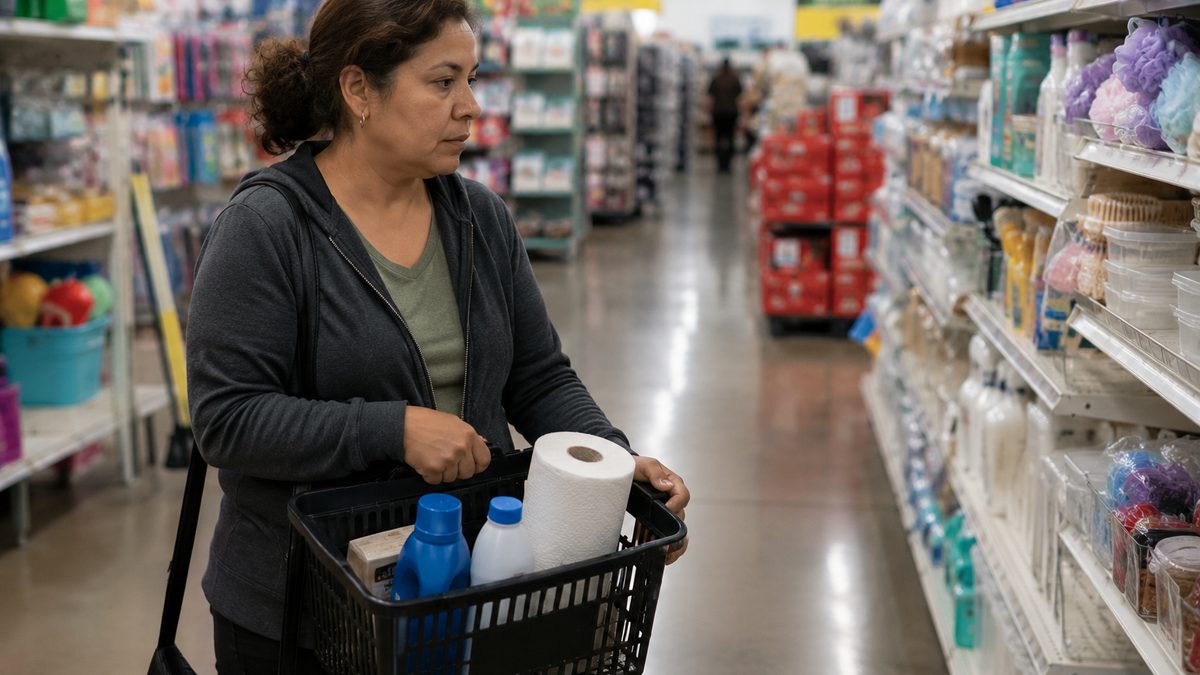
Discount retailers are leaning into low-price items as families continue looking for ways to stretch household budgets. Editorial illustration by TheDailyGlobe.
Key Facts
- Dollar General discussed its $1 price-point strategy during its Q1 2026 earnings call.
- Earnings-call transcript materials describe Value Valley and a frozen section with $1 items.
- Follow-up reporting said Dollar General is emphasizing more than 2,000 products priced at $1 or less.
- The company’s value push should be understood as a company strategy, not proof that every item is cheaper than competitors.
- It remains unclear how many $1 items are available in every store or whether shoppers save more overall.
Near the end of a pay period, a small basket can matter more than a full cart. A shopper may not be trying to get the lowest price per ounce or stock up for the month. They may simply need laundry soap, frozen food, snacks, paper goods or personal-care items without pushing the total bill too high.
That is the everyday pressure behind Dollar General’s renewed emphasis on $1 items. The company discussed its value strategy during its first-quarter 2026 earnings call, including Value Valley and a frozen section with $1 items. Follow-up reporting said Dollar General is emphasizing more than 2,000 products priced at $1 or less.
The move says something larger about how many families are shopping right now. For households watching every dollar, affordability is not only about whether a store has the best deal on a bulk package. It is also about whether the total checkout price stays low enough to get through the week.
Why $1 Still Gets Attention
A $1 price tag has a simple appeal. It is easy to understand and easy to fit into a tight budget. For a shopper trying to keep the total under $20 or $30, a row of low-price items can feel more useful than a sale that requires buying in larger quantities.
That does not mean the $1 item is always the best value. A larger package at another store might cost less per ounce or last longer. But not every household can shop that way all the time. Families living paycheck to paycheck often make choices based on immediate cash flow, not only long-term savings math.
That is where dollar stores have carved out a role. They often serve shoppers who need a short trip, a small basket, a familiar price point and basic goods close to home. In rural areas and smaller towns, discount stores can also be part of the local shopping routine, especially where larger grocery options are farther away.
What Dollar General Is Saying
Dollar General’s earnings materials describe Value Valley and $1 frozen items as part of the company’s effort to serve value-focused customers. That framing should be read carefully because it comes from the company. Businesses have a reason to present pricing moves as helpful to customers and promising for sales.
Still, the strategy is clear enough: Dollar General is leaning into low-price products at a time when many shoppers are sensitive to the total cost of groceries, household supplies and everyday basics. Reporting that the company is emphasizing more than 2,000 products priced at $1 or less gives the strategy a concrete shape, even though availability may vary by store.
The company is not alone in trying to capture value-seeking customers. Grocery stores, big-box chains, pharmacies and online retailers all compete for shoppers who are comparing prices more carefully. Dollar General’s $1 push is one version of a broader retail fight over the budget-conscious household.
The Difference Between Price and Affordability
For many families, the difference between price and affordability is real. A large package may be a better bargain, but it still requires more money upfront. A smaller package may cost more over time but keep today’s checkout total lower.
That is why the $1 strategy can connect with shoppers even when it does not answer every budget question. A family may choose a smaller cleaning product, a single frozen item or a low-cost snack because that is what fits the week. The decision may not be about loyalty to one store. It may be about getting through the current bill cycle.
This is also where the story reaches beyond Dollar General. When more retailers promote entry-level price points, it suggests that companies see customers making smaller, more careful choices. The shopper is not only asking, “Is this a good deal?” The shopper is asking, “Can I pay for this today?”
What Remains Unclear
Several important questions remain unanswered. It is not clear how many $1 products are available in every Dollar General store, how long the assortment will last, or how much shoppers save overall. It is also unclear whether families using more $1 items are lowering total spending or simply shifting purchases from one store or package size to another.
The company’s statements and follow-up reporting show a pricing strategy, not a full picture of household savings. They do not prove Dollar General is cheaper than competitors in all cases. They also do not show whether shoppers are buying more essentials, more discretionary items or smaller versions of products they would have bought anyway.
Competitor response is another open question. If more retailers see shoppers responding to low entry prices, they may promote similar value sections, private-label goods or smaller package sizes. That could give consumers more options, but it could also make price comparisons more complicated.
What to Watch Next
The next signs will come from dollar-store earnings, grocery and household-goods inflation data, and how other retailers talk about budget shoppers. If companies keep highlighting low-ticket items, it will show that the fight for the value customer remains intense.
For readers, the bigger point is not whether one chain has the best price. It is that many families are shopping with cash flow in mind. Dollar General’s $1 push is a company strategy, but it reflects a household reality: when budgets are tight, the final number at checkout can matter as much as any advertised deal.
Reporting note: Reporting draws on company earnings materials, investor information, established consumer business reporting, and reviewed background materials. This article was produced with AI-assisted research and reviewed by an editor before publication.